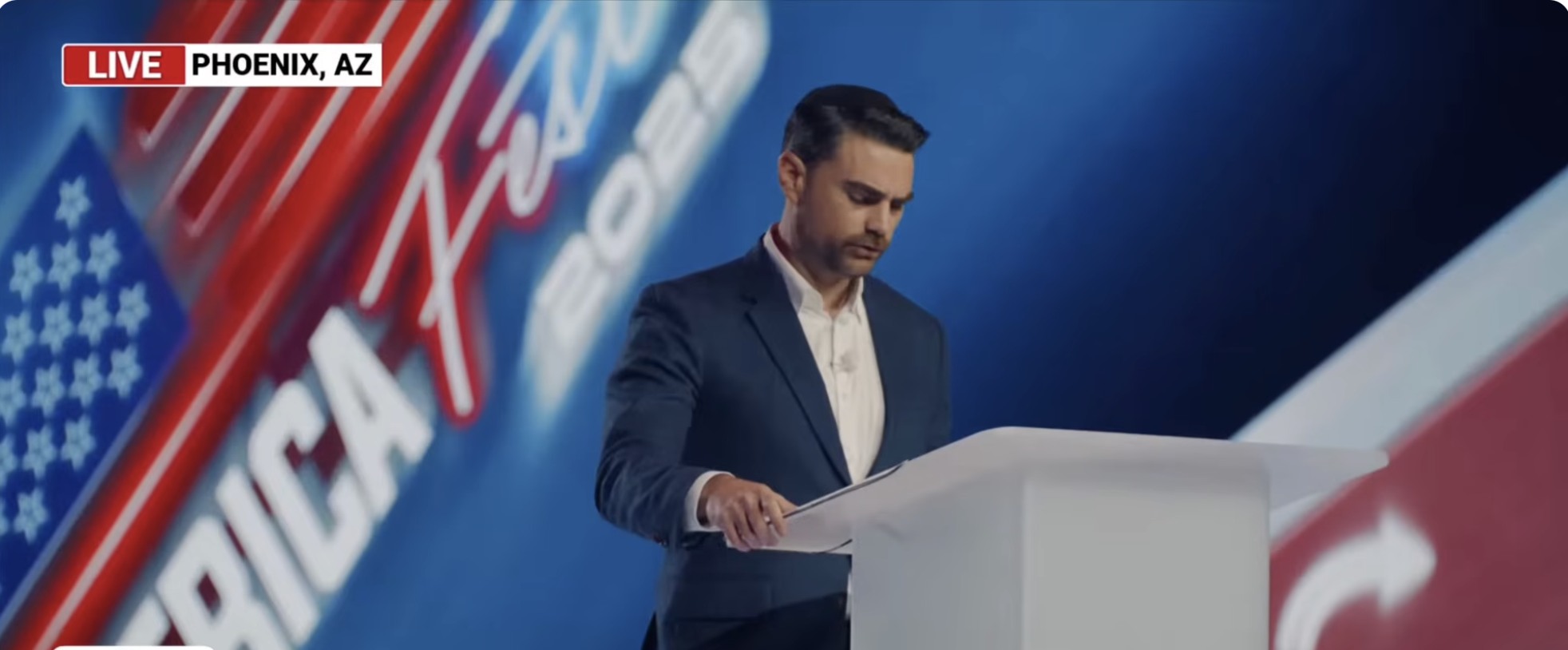
On the opening day of Turning Point USA’s flagship annual conference, known as AmericaFest, stark divisions within the MAGA wing of the Republican Party were thrust into the spotlight, overshadowing what was intended to be a cohesive gathering of conservative influencers, activists, and young Republicans.
The event, held in Phoenix, Arizona, marked the first national conference for the organization since the assassination of its charismatic founder, Charlie Kirk, in September.
Turning Point USA has long been a major hub for youthful conservative energy, but this year’s kickoff revealed deep fractures in the movement and mounting internal conflict.
The most dramatic moment early in the conference came when Ben Shapiro, a prominent conservative commentator and podcaster, used his keynote slot to launch a blistering critique of fellow conservative figures who were also scheduled to speak at the event.
Shapiro characterized individuals such as Tucker Carlson, Candace Owens, Megyn Kelly, and Steve Bannon as “frauds and grifters,” accusing them of elevating conspiratorial thinking and extremist voices that threaten the integrity of the broader conservative movement.
He charged that some conservative media personalities trafficked in conspiracy theories rather than principled argument, and warned that the movement was in danger of being undermined from within.
His remarks drew both cheers and audible gasps from the audience, underscoring the intensity of the disagreements playing out onstage.
Shortly after Shapiro’s speech, Tucker Carlson, the former Fox News host turned independent media figure, took the same stage to push back. Carlson mocked the notion of “deplatforming and denouncing” dissenting voices — framing the criticism as hypocritical and at odds with what he described as core principles of free speech and the “America First” agenda that defined much of the Trump-era movement.
He defended his decisions to platform controversial figures and insisted that some of the backlash against him was driven by political jockeying over the post-Trump leadership of the Republican Party. Carlson also rejected claims of antisemitism, labeling such accusations as immoral, yet sparked further debate by suggesting that racism against white men has been overlooked in national discourse.
Underlying much of the public sparring was the absence of a unifying figure who could bridge ideological divides — most notably Charlie Kirk, whose death last fall left a leadership void at Turning Point USA and in the broader MAGA coalition.
Kirk was widely seen as someone who balanced various factions within the movement, and without him, prominent voices have increasingly clashed over both style and substance.
Conflicts erupted not just around personalities but over what ideas should define the movement’s future, especially as the GOP begins to look past former President Donald Trump, who is now barred from running again.
Adding to the discord has been the controversy over conspiracy theories surrounding Kirk’s death, which have proliferated online and among some right-wing commentators.
Candace Owens, a former Turning Point USA associate and influential conservative podcaster, has been a focal point of those theories, suggesting, without evidence, that forces beyond the officially accepted narrative were involved in Kirk’s assassination. Turning Point leadership, led by Kirk’s widow Erika Kirk, has publicly rejected these claims as harmful and baseless, warning that they risk hindering justice and creating division.
Shapiro, himself Jewish, did not shy away from criticizing those who have failed to denounce conspiracy peddlers and extremists, intensifying the debate onstage.
Erika Kirk’s role at the conference added a unique emotional and political dimension to the event. As the new leader of Turning Point USA, she used her opening remarks to honor her late husband’s legacy while also addressing the growing splits within the movement.
She emphasized the need for unity amidst disagreement and rallied the audience around the organization’s goals, including her endorsement of Vice President JD Vance as a prospective presidential candidate in 2028, signaling Turning Point’s intention to shape the GOP’s leadership direction. Her comments reflected both the organization’s resilience and the challenges of maintaining cohesion in a shifting political landscape.
The infighting at AmericaFest has drawn attention not only for its intensity but also for what it suggests about the broader Republican Party’s trajectory.
With Trump’s influence still dominant but his era nearing its constitutional end, conservative activists and influencers are jockeying for prominence and defining what “Make America Great Again” means moving forward.
Issues such as the role of conspiracy theories, the boundaries of acceptable discourse, and the place of controversial media figures within the movement have all become flashpoints of contention. Many observers see these skirmishes as symptomatic of a movement striving for identity and direction in a post-Trump era.