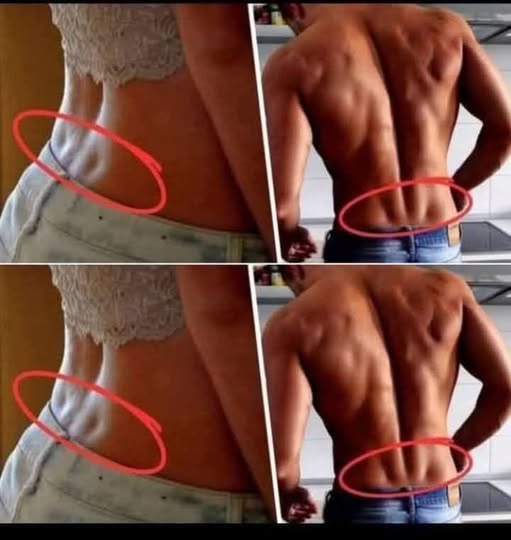
Understanding What Lower Back Dimples Actually Are
The small indentations sometimes visible on the lower back are located near the posterior superior iliac spine, which is a bony prominence of the pelvis. These dimples appear because of the way skin is connected to underlying structures in that area. In particular, short ligaments or natural connective tissue tension can create a slight inward pull on the skin, producing a visible indentation.
In simple terms, they are not muscles, not a result of exercise, and not a feature that develops later in life through training. Instead, they are part of individual skeletal and connective tissue structure. Just as people vary in eye shape, hand size, or jawline structure, the presence or absence of these lower back indentations is another example of natural human variation.
The terms “Venus dimples” and “Apollo dimples” are informal and culturally inspired labels. “Venus” refers to the Roman goddess associated with beauty, while “Apollo” refers to the Roman god often associated with strength and athletic form. These names are symbolic rather than scientific.
Can These Dimples Be Created Through Exercise?
One of the most common questions about these lower back indentations is whether targeted exercise can create them. The short and scientifically accurate answer is no.
Exercise can strengthen muscles, improve posture, reduce body fat, and enhance overall physical conditioning. However, it cannot change the underlying placement of connective tissue or bone structure that determines whether these dimples are visible in the first place.
This means that even with consistent training—such as strength workouts, core exercises, or lower back conditioning—someone who does not naturally have the anatomical structure for these dimples will not develop them. Fitness can improve how defined the area looks, but it does not create the structural indentation itself.
This is similar to other inherited traits. For example, training cannot change the natural shape of ears, the distance between eyes, or the structure of cheekbones. These features are determined before birth and remain consistent throughout life.
The Role of Genetics in Their Presence
Genetics plays the primary role in whether a person has visible lower back dimples. If close family members have them, there is a higher likelihood that they may also appear in other relatives, although this is not guaranteed.
However, genetic influence does not mean they are rare or exclusive. Many people around the world have them, while many others do not, and both outcomes are completely normal. It is simply one of many small anatomical differences among humans.
Importantly, there is no “better” or “worse” outcome in terms of health or physical ability. The presence or absence of these indentations does not determine strength, endurance, athletic performance, or overall physical function.
Why They Become More or Less Visible
While genetics determines whether these dimples exist structurally, their visibility can change depending on body composition and lifestyle factors.
In individuals with lower levels of subcutaneous fat in the lower back region, these indentations may appear more defined. Conversely, when there is a higher layer of body fat in the area, the natural contours of the pelvis may be less visible.
This does not mean the dimples disappear or are created—it simply means they are either more noticeable or less noticeable based on surrounding tissue. Weight fluctuations, hydration levels, posture, and overall muscle tone can all subtly influence how visible they appear at different times.
However, it is important to avoid oversimplifying this into a measure of fitness or health. Body composition varies widely among healthy individuals, and visibility of a single anatomical feature does not define overall well-being.
Misconceptions About Health and Fitness
Over time, these lower back indentations have been associated in some online discussions with fitness level or even health status. While they are often more visible in individuals with leaner body composition, there is no scientific evidence to support the idea that they directly indicate superior health.
Having visible dimples in this area does not automatically mean a person has better circulation, lower visceral fat, or higher physical performance. Likewise, not having them does not indicate poor health or lack of fitness.
Health is a complex combination of many factors, including cardiovascular function, muscle strength, metabolic health, mental well-being, nutrition, sleep quality, and stress management. No single external feature can accurately represent all of these components.
Therefore, it is more accurate to view these dimples as a neutral anatomical characteristic rather than a diagnostic or evaluative marker of health.
Cultural Interest and Historical Perception
Throughout history, different physical traits have been admired or highlighted as symbols of beauty or strength in various cultures. Lower back dimples have occasionally been included in artistic representations of the human form, particularly in sculpture and classical art, where emphasis was often placed on symmetry and proportion.
In modern times, interest in these features has grown significantly due to fitness culture and social media platforms. Images highlighting physical aesthetics often bring attention to small anatomical details, including these indentations. As a result, they have gained popularity as a perceived “desirable” trait in certain circles.
However, cultural appreciation of a physical feature does not change its biological purpose or significance. What is considered attractive or notable can vary widely across cultures and time periods.
Fitness Culture and Online Trends
Within fitness communities, visible lower back dimples are sometimes casually associated with low body fat or a toned physique. This has contributed to their popularity in online discussions, particularly among people interested in body aesthetics.
However, this association can be misleading if taken too literally. Fitness is not defined by isolated visual traits. A person can be extremely strong, healthy, and physically capable without having visible dimples in this region.
Similarly, someone may have visible dimples and still have varying levels of fitness or health markers. The human body does not follow a single visual template for wellness.
For this reason, most health professionals and trainers emphasize overall progress and functional ability rather than focusing on individual aesthetic features.
The Importance of Body Diversity
Human anatomy is naturally diverse. Features like skin tone, bone structure, muscle distribution, and fat storage patterns vary widely from person to person. Lower back dimples are simply one of many variations that may or may not be present.
This diversity is not a flaw or a deviation—it is part of normal human biology. Focusing too heavily on specific aesthetic traits can sometimes lead to unrealistic expectations about how bodies “should” look.
A more balanced perspective is to understand that no single feature defines attractiveness, capability, or health. Every body has its own structure and strengths, shaped by a combination of genetics and lifestyle.
A Balanced Perspective on Appearance and Self-Image
It is easy in modern media environments to become overly aware of specific physical traits and compare them across individuals. However, doing so often leads to distorted perceptions of what is normal.
Lower back dimples, like many other minor anatomical features, should be viewed as optional variations rather than standards to achieve. Some people have them, others do not, and neither situation carries inherent value judgment.
What matters more from a health perspective is maintaining habits that support long-term well-being—regular movement, balanced nutrition, adequate rest, and mental health care.
When appearance is viewed through this broader lens, individual features become less significant, and overall wellness becomes the central focus.
Final Thoughts
Lower back dimples—whether called Venus or Apollo dimples—are a small and interesting part of human anatomy that arise from natural structural differences in the pelvis and connective tissue. They are determined primarily by genetics and cannot be created through exercise alone.
Their visibility may change depending on body composition, but they do not serve as a reliable indicator of health, fitness level, or physical ability. Instead, they represent one of many subtle variations that contribute to human diversity.
Ultimately, the presence or absence of these indentations is not something that defines a person’s strength, beauty, or worth. They are simply a minor anatomical detail in the broader complexity of the human body. True well-being is better understood through overall physical health, functional strength, and quality of life rather than any single visible trait.
Appreciating the body for what it can do—and recognizing the wide range of normal variation among people—offers a more grounded and realistic understanding of health and appearance.