The Meaning Behind “WC”: A Small Sign With a Surprisingly Big History
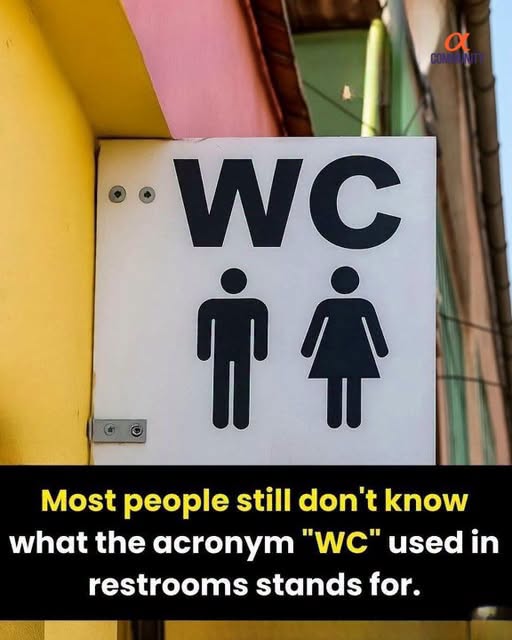
Almost everyone has seen the letters “WC” displayed on restroom doors at some point in their lives. Whether in airports, restaurants, train stations, shopping malls, hotels, museums, or historic buildings, the sign appears so frequently that most people instantly understand what it refers to without needing any explanation.
It has become one of those universal symbols that transcends language barriers. A traveler in a foreign country may not recognize the local word for “bathroom,” but the letters “WC” are often enough to guide them in the right direction.
Yet, despite how common this abbreviation is, very few people pause to consider what it actually means or where it comes from. Behind those two simple letters lies a fascinating story connected to technological progress, changing lifestyles, and one of the most important improvements in modern public health: indoor plumbing.
To understand “WC,” we need to travel back in time more than a century and a half, to an era when bathrooms as we know them today did not yet exist.
What Does “WC” Actually Stand For?
The abbreviation “WC” stands for “Water Closet.”
At first glance, the term may sound unusual or even outdated, especially in today’s world where we use words like “bathroom,” “restroom,” or “toilet.” However, during the 19th century, “water closet” was a practical and modern expression used to describe a small enclosed room containing a flushing toilet.
Back then, the introduction of running water and flushable toilets was a major technological breakthrough. As a result, new vocabulary was needed to describe these innovations, and “water closet” became the accepted term.
Over time, the phrase was shortened to the more convenient abbreviation “WC,” which eventually appeared on doors, architectural drawings, and public signage across Europe and many other parts of the world.
Even today, despite changes in language and design, the abbreviation continues to survive as a widely recognized international symbol for restroom facilities.
Life Before Indoor Toilets: A Very Different Reality
To fully appreciate why the term “water closet” emerged, it helps to imagine everyday life before modern plumbing systems existed.
During much of the 18th and early 19th centuries, homes were built without indoor bathrooms. People did not have the convenience of turning on a tap for clean water or flushing waste away with a lever.
Instead, daily hygiene routines were far more labor-intensive. Bathing required manually collecting water, heating it over a fire or stove, and filling a tub. This process could take a significant amount of time and effort, meaning baths were often infrequent compared to modern standards.
Toilet facilities were even more basic. In many cases, people relied on outdoor outhouses or communal latrines. In urban areas, waste disposal systems were often poorly developed, contributing to sanitation challenges and unpleasant living conditions.
As cities grew during the Industrial Revolution, overcrowding made these issues even more pressing. Public health problems became more visible, and the need for improved sanitation systems became increasingly urgent.
The Arrival of Indoor Plumbing and a New Era of Comfort
The 19th century brought significant technological progress, including improvements in water distribution and waste management systems. Engineers and inventors began developing ways to bring running water directly into homes and buildings.
One of the most transformative innovations was the flushing toilet. This invention allowed human waste to be quickly and hygienically transported away from living spaces through a system of pipes and sewage channels.
However, integrating this new technology into existing homes was not always simple. Buildings were not originally designed to accommodate indoor plumbing systems. As a result, small spaces were often repurposed or modified to fit these new installations.
These compact rooms, typically equipped with a flush toilet and access to running water, became known as “water closets.”
The term emphasized the key feature that distinguished them from older toilet facilities: the use of water for flushing and sanitation.
Why It Was Called a “Closet”
The word “closet” in this context does not refer to clothing storage, as it often does today. Historically, the word was used more broadly to describe a small, enclosed room or private space.
A “water closet,” therefore, simply meant a small enclosed room equipped with water-based sanitation.
These rooms were often compact, functional, and separate from bathing areas. In many homes of the Victorian era, the bathroom was not a single unified space like it is today. Instead, bathing and toilet facilities were frequently divided into different rooms.
Over time, as plumbing systems evolved and living standards improved, these spaces were eventually combined into the modern bathroom layout we are familiar with today.
The Spread of the Term “WC” Around the World
As indoor plumbing technology spread across Europe and beyond, so did the terminology associated with it. “Water closet” and its abbreviation “WC” became especially common in European countries.
Even as different languages developed their own words for “bathroom” or “toilet,” the abbreviation “WC” remained widely understood, particularly in public signage.
Today, it is still commonly seen in countries across Europe, parts of Asia, and international travel hubs. Airports, train stations, and hotels often use “WC” because it is short, clear, and easily recognized by travelers from different linguistic backgrounds.
In some places, the term has become more formal or traditional, while in others it is still used interchangeably with modern labels like “toilet” or “restroom.”
Why the Term Still Survives Today
Language evolves constantly, and many older expressions gradually disappear. However, “WC” has managed to remain in use for several reasons.
1. International Recognition
One of the biggest advantages of “WC” is its simplicity. Two letters are easy to recognize regardless of language background, making it useful in global travel environments.
2. Practical Design in Public Spaces
Public signage often prioritizes clarity and minimalism. “WC” fits well on small signs, directional arrows, and icons.
3. Historical Continuity
In many countries, the term has been used for generations. As a result, it remains familiar even if newer words exist.
4. Architectural Tradition
Older buildings, especially in Europe, may still retain original signage or design terminology, preserving the historical label.
Even though modern bathrooms are far more advanced than the original “water closets,” the abbreviation continues to serve a practical purpose.
A Term That Resurfaced in the Digital Age
In recent years, the meaning of “WC” has gained renewed attention through social media platforms. Short videos explaining its origin have gone viral, surprising many viewers who had never thought about the meaning behind the letters.
A large number of people admitted that they had seen the sign countless times without ever questioning it. For some, the explanation came as a revelation, while others found it amusing that such a familiar abbreviation could have such a historical background.
This kind of online discussion highlights how everyday symbols often go unnoticed until they are placed in a new context. Something as ordinary as a restroom sign can suddenly become interesting once its origin is explained.
The Role of “WC” in Public Health History
Beyond language and signage, the story of the water closet is deeply connected to one of the most important developments in human history: modern sanitation.
Before the widespread adoption of indoor plumbing, diseases linked to poor hygiene and contaminated water were common in densely populated cities. Cholera, typhoid, and other waterborne illnesses posed serious public health risks.
The introduction of flushing toilets and improved sewage systems played a crucial role in reducing these diseases. By safely removing waste from living areas, cities became healthier and more livable.
In this sense, the “water closet” was not just a convenience—it was a life-changing innovation that contributed significantly to public health improvements worldwide.
How Bathroom Design Evolved Over Time
The modern bathroom is very different from its early predecessors. What once consisted of separate, small functional rooms has evolved into a unified space that often includes multiple features.
Today’s bathrooms may contain:
- Toilets with advanced flushing systems
- Sinks with hot and cold running water
- Showers and bathtubs
- Ventilation systems
- Storage and hygiene products
This transformation reflects broader changes in architecture, lifestyle, and expectations of comfort.
As homes became larger and plumbing systems more advanced, the need for separate “water closets” gradually diminished. However, the terminology remained even after the original design concept changed.
Cultural Differences in Bathroom Terminology
Different regions of the world use different words to refer to the same facility. While “WC” remains common in many places, other terms are more frequently used elsewhere.
For example:
- “Bathroom” is commonly used in the United States
- “Toilet” is widely used in the United Kingdom and many other countries
- “Restroom” is often used in public places in North America
- “Loo” is an informal term in British English
Despite these differences, “WC” continues to function as a neutral and internationally recognizable label, especially in transportation hubs and tourist locations.
Why Small Details Like “WC” Matter
At first glance, something as simple as a restroom sign may not seem significant. However, it represents how language, technology, and society evolve together.
The abbreviation “WC” is more than just a label—it is a reflection of historical change. It connects modern life to a period when indoor plumbing was a groundbreaking innovation that reshaped daily living.
It also demonstrates how certain terms can survive long after their original context has changed, simply because they remain useful and widely understood.
Frequently Asked Questions About “WC”
Is “WC” still commonly used today?
Yes, it is still widely used, especially in Europe and international travel locations.
Is “WC” the same as a bathroom?
In modern usage, yes. However, historically it referred specifically to a small room containing a flushing toilet.
Why don’t all countries use “WC”?
Language preferences vary by region, and many countries have adopted their own terms.
Is the term outdated?
Not necessarily. While it originated in the 19th century, it remains practical in global signage.
Conclusion: A Simple Sign With a Deep History
The letters “WC” may appear simple, but their origin tells a much larger story about human progress. From the challenges of pre-plumbing life to the revolutionary impact of indoor sanitation systems, the “water closet” represents a key milestone in modern living.
What began as a practical description of a new type of room eventually became a globally recognized abbreviation. Even today, it quietly continues its role in guiding people, bridging language gaps, and preserving a small piece of history in everyday life.
So the next time you see “WC” on a door, it is worth remembering that those two letters carry the legacy of one of the most important improvements in comfort, hygiene, and public health that the modern world has ever seen.