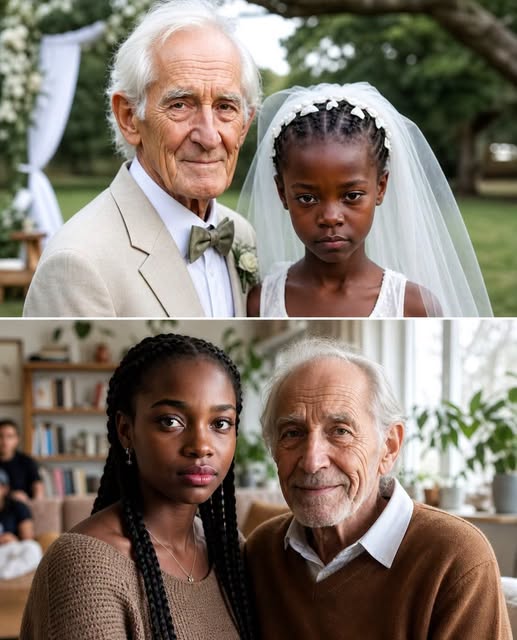
A photograph showing an older man beside a young Black girl dressed in white has circulated with claims about marriage. The image is emotionally powerful, but it does not provide the names, location, date, relationship, or event needed to verify those claims. Clothing that resembles a wedding dress and a formal pose can invite a dramatic conclusion, yet appearance alone is not evidence.
The girl may be participating in a family ceremony, performance, religious event, community tradition, or staged photograph. The older man could be a relative, organizer, actor, or stranger. Without reliable provenance, all of those possibilities remain speculation. Adding a story to an image because it feels plausible can turn unidentified people into characters in a narrative they never agreed to tell.
That caution does not make the concerns raised by the photograph unimportant. Child marriage is real and affects millions of girls around the world. It can interrupt education, increase economic dependence, limit freedom, and expose children to pregnancy and violence. Laws and enforcement vary by country and region, and exceptions can undermine minimum-age protections. Those facts deserve reporting based on verified cases and credible data.
Images have unusual power online because people process them before checking context. A caption can direct viewers toward fear, outrage, or sympathy within seconds. Once shared, the claim becomes attached to the photograph even if the original post is corrected. Cropping may remove signs that explain the event, while reposting can separate the image from its source entirely.
Reverse-image searches, archived pages, photographer credits, original captions, and reputable reporting can help establish context. The earliest available upload is often more useful than the most popular one. Readers should also check whether multiple websites repeat the same wording without citing evidence. Repetition creates familiarity, not verification.
Ethics matter especially when a child appears in the image. Identifying a minor as a victim of abuse or forced marriage without proof can cause lasting harm. The child may face stigma, harassment, or unwanted attention. Even when a case is genuine, journalists and social media users should consider privacy, consent, and whether showing a recognizable face serves a legitimate public interest.
There is also a risk of reinforcing racial and cultural stereotypes. Viewers may accept the worst interpretation because it fits assumptions about a community they know little about. Serious human-rights issues should not be used to turn unfamiliar people into symbols. Responsible advocacy relies on local voices, documented evidence, and context rather than on a mysterious photograph alone.
The best response is to hold two ideas at once. Child marriage requires sustained attention and effective protection, while this particular image cannot prove the story attached to it. Saying “we do not know” is not indifference. It prevents misinformation from weakening genuine advocacy.
A compelling photograph can begin a question, but it cannot answer every question it raises. Before sharing, readers should look for the original source, check credible reporting, and avoid naming or judging the people shown. Concern for children is strongest when it includes concern for truth. The goal should be to protect real people, not to produce the fastest or most shocking caption.
Platforms and publishers also have responsibilities. Context labels, reporting tools, and limits on monetizing deceptive claims can slow harmful circulation. Editors should avoid using an unidentified child’s face merely because it increases engagement. When an image cannot be verified, a licensed illustrative photograph or a discussion without identifying the child may be more ethical. The public interest lies in understanding the issue, not in exposing a particular minor to endless reinterpretation.
Truthful uncertainty is more responsible than a confident mistake.