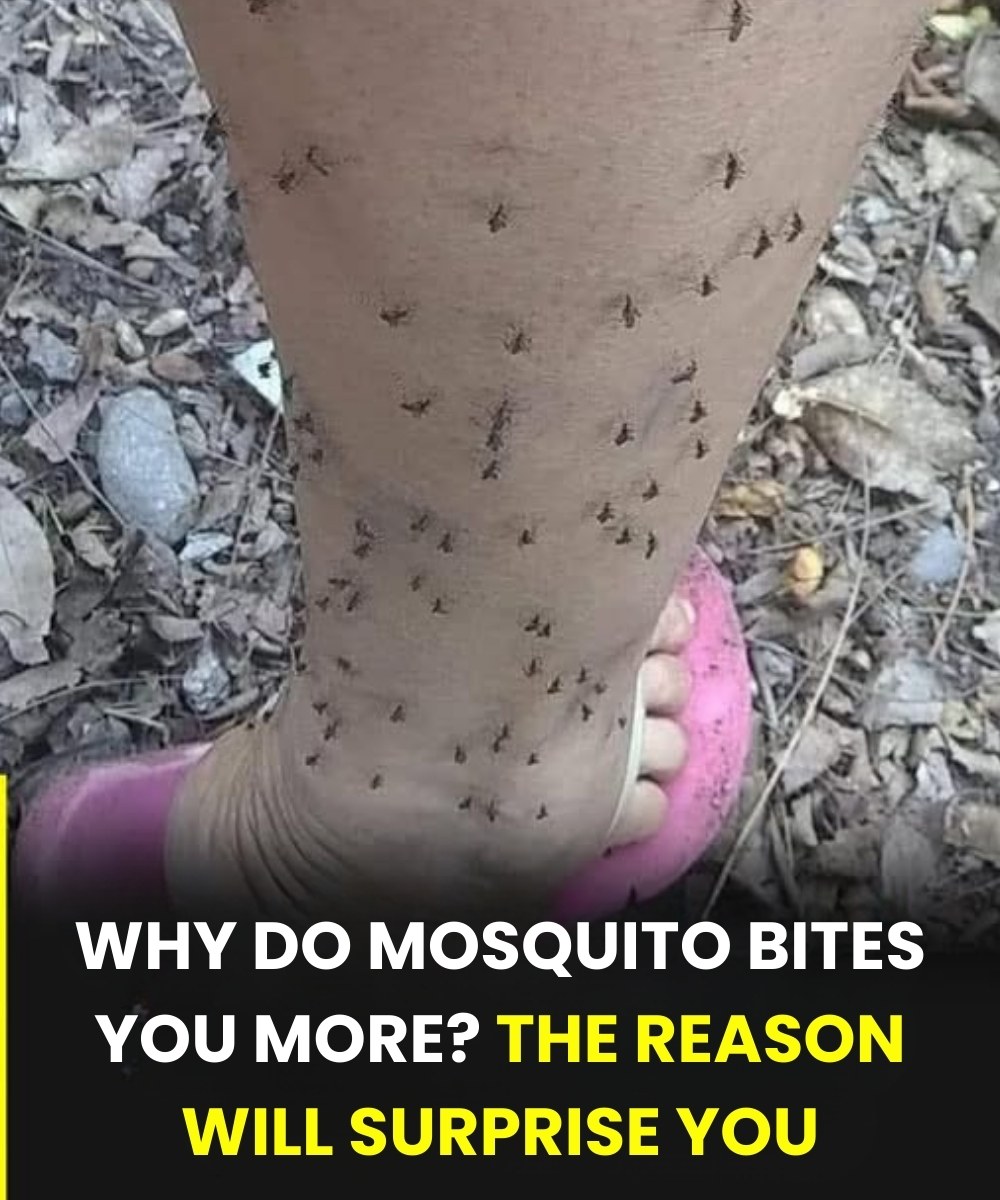
Almost everyone has experienced it at least once. A group of friends gathers outside on a warm evening. The mood is relaxed, conversation flows easily, and everything seems perfect—until the gathering ends. One person walks away scratching, arms and legs dotted with itchy red marks, while others appear completely unaffected. Repellent may have been applied. Long sleeves may have been worn. Precautions may have been taken. Yet the result is always the same.
It often leads to a familiar conclusion: mosquitoes seem to choose favorites.
This perception is not based on coincidence or imagination. Scientific research has consistently shown that mosquitoes do not bite humans randomly. Instead, they rely on a complex combination of biological signals, chemical cues, and environmental factors to decide where to land and who to bite. Some people, through no fault of their own, naturally send stronger signals that mosquitoes are especially good at detecting.
Understanding why this happens can help explain uneven mosquito bites and offer insight into how attraction works at a biological level.
Mosquito Behavior Is Purposeful, Not Random
To understand mosquito preferences, it is important to know that not all mosquitoes bite humans. Only female mosquitoes feed on blood, and they do so for a specific biological reason. Blood provides essential nutrients that help them produce and develop eggs. Without this blood meal, reproduction would not be possible.
Over thousands of years, mosquitoes have evolved highly sensitive sensory systems designed to locate suitable hosts as efficiently as possible. This evolution has resulted in a remarkable ability to detect subtle changes in the environment that signal the presence of a potential blood source.
Humans, without realizing it, constantly release these signals.
The Invisible Signals the Human Body Releases
The human body is continuously emitting chemical and physical cues into the surrounding air. These cues are undetectable to other people but highly noticeable to mosquitoes. From exhaled breath to skin temperature, each signal contributes to how visible a person is to insects.
Some individuals naturally produce stronger versions of these cues. As a result, mosquitoes are more likely to locate them first, return to them repeatedly, and ignore others nearby.
Carbon Dioxide: The Primary Beacon
Among all the signals humans emit, carbon dioxide (CO₂) is one of the strongest and most influential when it comes to mosquito attraction. Every time a person exhales, carbon dioxide is released into the air. Mosquitoes can detect this gas from significant distances and use it as a directional guide.
People who produce more carbon dioxide are easier for mosquitoes to locate. Several factors influence how much CO₂ a person emits, including body size, height, metabolism, and activity level.
Individuals with larger bodies or higher metabolic rates tend to release more carbon dioxide simply because their bodies require more oxygen. Similarly, people who are physically active, breathing faster or deeper, increase the amount of CO₂ in the air around them. This creates a clear trail that mosquitoes can follow with remarkable accuracy.
Body Heat and Temperature Gradients
Carbon dioxide alone does not explain everything. Once mosquitoes move closer to a potential host, they rely on body heat to guide their final approach. Humans naturally generate heat, and mosquitoes are sensitive to temperature differences between skin and surrounding air.
People with slightly higher skin temperatures may be easier targets. This does not necessarily mean someone has a fever or is unwell. Normal variations in circulation, clothing choice, and environmental exposure can affect how warm a person appears to mosquitoes.
Heat acts as a confirmation signal, helping mosquitoes distinguish between living hosts and other carbon dioxide sources.
The Role of Skin Chemistry and Natural Odor
Every human has a unique chemical signature. This signature is created by a combination of natural body odor, skin secretions, and the microorganisms that live on the skin’s surface.
Human skin is home to millions of bacteria. These bacteria interact with sweat and oils, producing specific chemical compounds that contribute to personal scent. While humans may not notice these differences, mosquitoes are extremely sensitive to them.
Certain combinations of these compounds are more attractive to mosquitoes than others. This attraction is not related to hygiene or cleanliness. Even freshly washed skin continues to produce chemical cues once bacteria resume normal activity.
In fact, studies suggest that people with higher diversity or specific types of skin bacteria may be more appealing to mosquitoes, regardless of personal grooming habits.
Why Cleanliness Does Not Prevent Bites
A common misconception is that mosquitoes prefer people who are unclean or sweaty. While sweat plays a role in attraction, cleanliness itself is not a protective factor. Showering may temporarily reduce odor, but it does not eliminate the natural chemical processes that mosquitoes detect.
Within minutes or hours, skin resumes releasing scent compounds. These natural odors are part of normal human biology and cannot be completely removed.
Blood Type and Mosquito Preference
Scientific research has identified a connection between blood type and mosquito behavior. Studies indicate that mosquitoes show a preference for certain blood types over others.
People with type O blood tend to receive more mosquito bites, while those with type A often experience fewer. Types B and AB fall somewhere in between. Researchers believe this may be due to subtle chemical markers released through the skin that make blood type detectable to mosquitoes.
Some individuals naturally secrete substances that signal their blood type more clearly, increasing their attractiveness regardless of other factors.
Genetic Factors and Inherited Traits
Mosquito attraction is not solely influenced by environment or behavior. Genetics also play a role. Certain inherited traits affect body odor, metabolism, and immune responses, all of which can influence how attractive a person is to mosquitoes.
This helps explain why mosquito preference often runs in families. If relatives consistently experience similar bite patterns, shared genetic traits may be contributing to the effect.
Sweat, Lactic Acid, and Physical Activity
Physical activity significantly increases mosquito attraction. When people exercise, their bodies produce sweat and lactic acid, both of which are released through the skin. These substances combine with increased body temperature and heavier breathing, creating an ideal set of signals for mosquitoes.
Lactic acid, in particular, has been identified as a strong attractant. It works alongside carbon dioxide to enhance mosquito detection. This is why bites are more common during outdoor activities such as sports, walking, or gardening.
Mosquitoes are also more active during certain times of day, often coinciding with periods when people are most physically active outdoors.
Environmental Factors That Increase Exposure
Even the most attractive individual will not be bitten if mosquitoes are absent. Environmental conditions play a major role in determining mosquito presence and activity.
Warm temperatures, standing water, humidity, and low wind conditions create ideal breeding and feeding environments. Areas near ponds, gardens, or poorly drained spaces tend to have higher mosquito populations.
Clothing choice can also influence exposure. Dark colors absorb heat and may make individuals easier to detect, while loose-fitting clothing can allow mosquitoes easier access to skin.
Why Repellents Don’t Work Equally for Everyone
Insect repellents are designed to interfere with mosquitoes’ ability to detect human signals. However, their effectiveness varies from person to person. Factors such as skin chemistry, sweat, and environmental conditions can reduce how long a repellent remains effective.
Some individuals metabolize or absorb repellent ingredients faster, meaning protection wears off sooner. Others may still emit strong signals that partially override repellent effects.
This variation can make it seem as though repellents “don’t work” for certain people, even when used correctly.
Alcohol Consumption and Mosquito Attraction
Research suggests that alcohol consumption may slightly increase mosquito attraction. Alcohol can raise body temperature and alter skin odor, making certain individuals more noticeable to mosquitoes.
While alcohol alone is not a major factor, it can amplify other signals, particularly in warm outdoor settings where mosquitoes are already active.
Pregnancy and Increased Sensitivity
Pregnant individuals may experience increased mosquito bites due to changes in metabolism, body temperature, and carbon dioxide output. Increased blood volume and slightly elevated skin temperature can make pregnant individuals more detectable.
This does not mean pregnancy attracts mosquitoes intentionally, but rather that physiological changes influence signal strength.
Why Some People Are Rarely Bitten
On the opposite end of the spectrum are individuals who rarely experience mosquito bites. These people may produce fewer attractive chemical signals, emit less carbon dioxide, or have skin bacteria that mosquitoes find less appealing.
This does not mean they are immune to mosquito bites, but rather that mosquitoes prioritize other hosts when given a choice.
What Can and Cannot Be Changed
While many mosquito-attracting factors are biological and difficult to control, some behaviors and environmental adjustments can reduce exposure.
Reducing standing water, wearing light-colored clothing, using fans to disrupt mosquito flight, and applying repellents properly can all help limit bites. However, it is important to recognize that individual susceptibility varies and is not a personal failing.
Understanding Mosquito Preference Without Blame
Mosquito attraction is a complex interaction between biology, environment, and behavior. Being bitten more frequently does not indicate poor hygiene, lifestyle choices, or health issues. It reflects natural variation in human biology.
Recognizing this can help reduce frustration and encourage more realistic expectations when spending time outdoors.
A Natural Interaction Between Species
Mosquitoes are not malicious or selective out of preference. Their behavior is driven by survival and reproduction. Humans, by simply existing, provide the signals mosquitoes have evolved to detect.
Understanding this interaction allows for better prevention strategies and more informed choices without unnecessary worry or self-blame.
Final Thoughts
The idea that mosquitoes have favorites is rooted in real science. Attraction is influenced by carbon dioxide, body heat, skin chemistry, genetics, blood type, and environmental conditions. Some people naturally emit stronger signals, making them easier for mosquitoes to find.
While complete avoidance is not always possible, awareness of these factors can help individuals take practical steps to reduce exposure and better understand why experiences differ from person to person.
In the end, mosquito preference is not about luck—it is about biology, chemistry, and the invisible signals that connect humans and the natural world.