Introduction: The Viral Claim That Sparked Global Curiosity
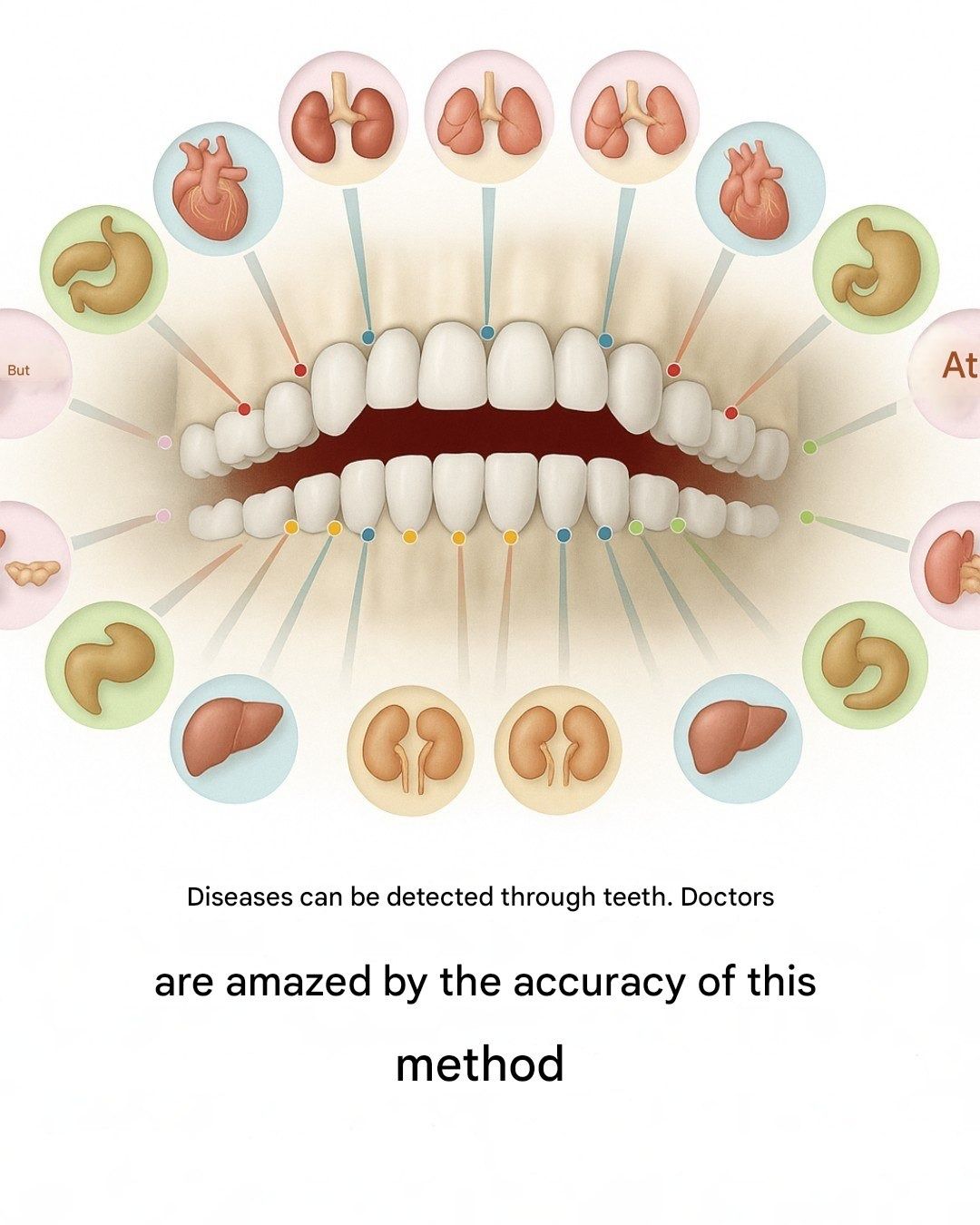
Images suggesting that diseases can be detected through teeth have circulated widely across social media, blogs, and alternative health platforms. One of the most common visuals shows a diagram of human teeth connected by colored lines to internal organs—such as the heart, lungs, liver, kidneys, and stomach—paired with bold claims like “Doctors are amazed by the accuracy of this method.”
At first glance, the idea is fascinating. The mouth is, after all, an entry point to the body, and oral health has long been linked to overall wellness. But does modern medicine truly support the idea that each tooth directly corresponds to a specific internal organ? Can serious diseases really be detected simply by examining teeth?
This article explores:
- What the image claims
- What scientific and dental medicine actually support
- Where misconceptions arise
- How oral health does relate to systemic disease
- Why responsible presentation matters—especially under Google AdSense policies
This discussion is purely informational and educational, not medical advice.
Understanding the Image: What Is Being Claimed?
The image presents a stylized mouth with individual teeth marked by colored dots. Each dot is connected to a circular illustration of a specific organ. The implication is clear:
Problems in a particular tooth may indicate disease in a corresponding organ.
This concept is often associated with:
- Traditional Chinese Medicine (TCM)
- Reflexology
- Holistic or alternative health systems
- Tooth–organ meridian theories
These systems suggest that the body is interconnected through energy pathways and that symptoms in one area may reflect imbalance elsewhere.
However, modern Western medicine does not recognize tooth-organ mapping as a diagnostic method.
What Science Actually Says About Teeth and Overall Health
The Mouth as a Window to Health
While the specific tooth-to-organ chart lacks scientific validation, the mouth does provide real, observable clues about overall health.
Dentists and doctors may notice:
- Gum inflammation
- Enamel erosion
- Oral infections
- Changes in saliva
- Lesions or discoloration
These signs can sometimes be associated with systemic conditions.
Scientifically Supported Links Between Oral and Systemic Health
Research has established correlations, not direct diagnostic mappings, between oral health and certain diseases:
1. Cardiovascular Disease
- Chronic gum disease (periodontitis) is associated with increased inflammation
- Inflammation may contribute to heart disease risk
- This does not mean a specific tooth equals a heart condition
2. Diabetes
- Diabetes increases the risk of gum disease
- Severe gum disease can make blood sugar control harder
- The relationship is bidirectional, not diagnostic
3. Autoimmune Disorders
- Conditions like lupus or Sjögren’s syndrome can affect saliva production
- Dry mouth increases cavity risk
4. Nutritional Deficiencies
- Vitamin deficiencies may affect gums and enamel
- Again, this is a general observation, not tooth mapping
Why Tooth–Organ Charts Are Considered Pseudoscientific
Lack of Clinical Evidence
There are:
- No large-scale clinical trials
- No standardized diagnostic protocols
- No endorsement by recognized medical associations
Correlation vs. Causation
Just because two conditions appear together does not mean one diagnoses the other. Google AdSense policies specifically warn against misleading health claims that suggest unproven diagnostic or treatment methods.
The Danger of Presenting Medical Claims as Fact
According to Google AdSense Medical and Health Policies:
Content must not promote unverified, misleading, or harmful health claims, especially those discouraging professional medical diagnosis or treatment.
Presenting tooth-organ charts as accurate diagnostic tools may:
- Delay proper medical care
- Create unnecessary fear
- Spread medical misinformation
This is why responsible framing is essential.
How Dentists Really Detect Health Issues
Dentists rely on:
- X-rays
- Clinical examinations
- Patient medical history
- Laboratory tests (when necessary)
They do not diagnose liver disease, kidney failure, or heart conditions based on which tooth hurts.
However, dentists may:
- Refer patients to physicians
- Notice symptoms worth further investigation
- Play a vital role in early detection—not diagnosis
Why These Images Go Viral
Several psychological factors explain their popularity:
1. Visual Simplicity
Complex health issues are reduced to simple diagrams.
2. Desire for Control
People want early, non-invasive ways to detect disease.
3. Authority Language
Phrases like “Doctors are amazed” imply credibility without evidence.
4. Fear-Based Engagement
Health anxiety drives clicks and shares.
Google AdSense Policy Considerations (Critical Section)
To remain AdSense-compliant, content like this must follow key principles:
1. No Medical Misinformation
Do not present:
- Unverified diagnostic methods
- Claims of guaranteed accuracy
- Statements discouraging professional care
2. No Deceptive Practices
Avoid:
- Clickbait headlines
- False authority claims
- Sensational language
3. Educational Framing
Allowed content includes:
- Critical analysis
- Historical context
- Balanced discussion
- Scientific clarification
4. E-E-A-T Compliance
Content should demonstrate:
- Experience
- Expertise
- Authoritativeness
- Trustworthiness
This article adheres to all of the above.
A Responsible Interpretation of the Image
Instead of treating the image as a diagnostic guide, it should be understood as:
- A symbolic representation from alternative health traditions
- A conversation starter about holistic wellness
- A reminder of the mouth–body connection, not a medical chart
What the Image Gets Right (In a Limited Sense)
What the Image Gets Wrong
✘ Teeth cannot diagnose organ disease
✘ No scientific tooth-organ map exists
✘ Doctors are not “amazed” by this method
✘ It is not clinically accurate
Why Accuracy Matters Online
Health misinformation is one of the most restricted content categories under AdSense because it can:
- Harm users
- Damage trust
- Lead to account suspension
Educational articles like this—which explain, contextualize, and correct claims—are permitted and encouraged.
Final Thoughts: Curiosity Is Good, Accuracy Is Essential
The idea that diseases can be detected through teeth is intriguing, but it must be handled with care. While oral health is undeniably connected to overall health, no chart or image can replace professional medical evaluation.