At first glance, images involving unfamiliar organisms interacting with the human body can trigger immediate reactions—curiosity, discomfort, or concern. The human skin, after all, is our most visible and personal boundary with the outside world. When something unexpected appears attached to it, especially something alive, questions arise quickly: What is this? Why is it there? Is it dangerous?
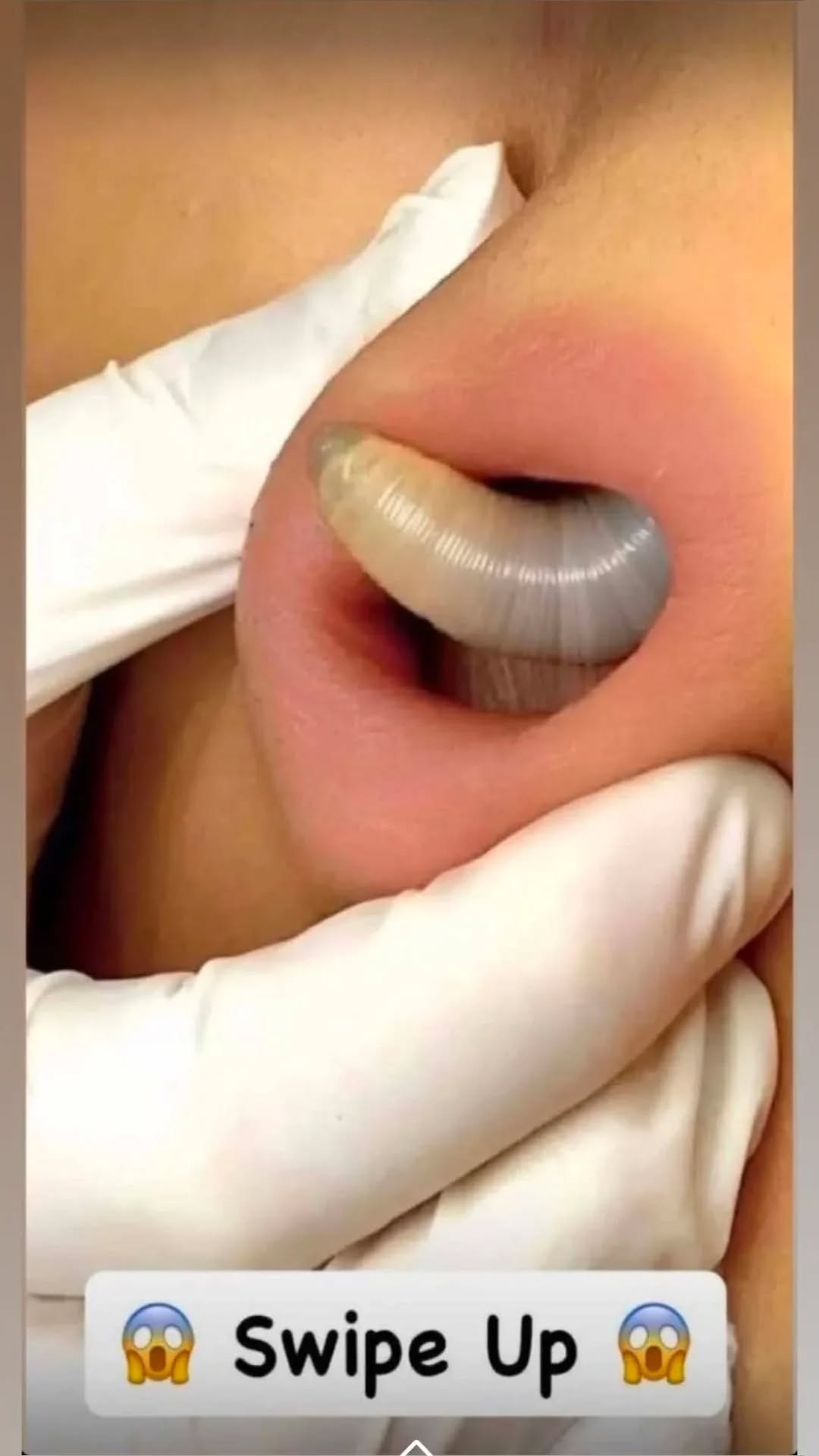
The image under discussion shows a leech attached to human skin during a controlled medical or observational setting. While this may look unsettling to some, it offers an opportunity to explore an often misunderstood topic that sits at the intersection of biology, traditional medicine, and modern healthcare.
This article aims to explain what is happening, why it happens, how leeches have been used historically and medically, and what individuals should know to stay informed and safe—without sensationalism, fear-based language, or graphic detail.
A Closer Look at What the Image Shows
The image depicts a leech attached to human skin, likely during a medical or therapeutic procedure. The surrounding skin appears mildly reddened, which is a common and expected response when the body reacts to a foreign organism or stimulus.
A gloved hand is visible, suggesting that this interaction is being managed by a trained individual, likely in a hygienic and intentional setting. This detail is important—it indicates that the situation is not accidental or uncontrolled.
Leeches, despite their reputation, are not random parasites in every context. In some circumstances, their presence is deliberate, purposeful, and even beneficial when used correctly.
What Is a Leech?
Leeches are segmented worms belonging to the phylum Annelida. They are closely related to earthworms and have existed on Earth for millions of years. While many people associate leeches solely with blood-feeding, not all species behave the same way.
Key characteristics of leeches include:
- Soft, flexible bodies
- Two suckers (one at each end)
- A slow, deliberate movement pattern
- The ability to attach firmly to surfaces, including skin
Only certain species are used in medical or therapeutic contexts, and these are bred and regulated specifically for safe use.
The Role of Leeches in Medical History
Leeches have a long and documented history in traditional and early medical practices. For centuries, they were used as part of bloodletting—a now outdated practice based on ancient theories of bodily balance.
However, modern medicine has rediscovered leeches for very specific and evidence-based applications, particularly in microsurgery and reconstructive procedures.
Modern Medical Applications Include:
- Supporting blood flow after reconstructive surgery
- Reducing venous congestion
- Promoting circulation in reattached tissue
- Assisting healing when veins struggle to drain blood effectively
Medical leeches release natural substances that help prevent clotting and improve blood movement, which can be critical in certain surgical recoveries.
Why the Skin Reacts the Way It Does
When a leech attaches to skin, the body responds naturally. Mild redness or swelling is common and usually temporary. This reaction is not inherently dangerous—it is simply part of the immune system recognizing and responding to an external presence.
The substances released by leeches include compounds that:
- Reduce clotting
- Encourage blood flow
- Temporarily numb the attachment area
These effects are well-studied and carefully managed in medical environments.
Common Misconceptions About Leeches
“Leeches are always dangerous”
This is false. Like many organisms, risk depends entirely on context, species, and handling.
“Leeches cause infections automatically”
In medical settings, leeches are sterilized and monitored. Infection risk is minimized through controlled use and post-procedure care.
“Only alternative medicine uses leeches”
Modern hospitals around the world still use leech therapy under strict protocols.
Accidental vs. Controlled Exposure
It’s important to distinguish between:
- Controlled medical use: supervised, hygienic, and purposeful
- Accidental exposure: such as swimming in untreated freshwater where wild leeches may be present
In accidental cases, leeches should be removed carefully and medical advice sought if irritation persists.
What to Do If You Encounter a Leech Naturally
If someone encounters a leech in a natural environment:
- Remain calm
- Avoid pulling it off forcefully
- Use gentle methods such as salt or clean water to encourage release
- Clean the area afterward
- Monitor for unusual symptoms
Most encounters are harmless when handled properly.
The Psychological Reaction: Why Images Like This Feel Disturbing
Humans are biologically wired to react strongly to unfamiliar organisms on the skin. This response is rooted in survival instincts rather than actual danger.
Understanding the science behind what we see can help replace fear with knowledge.
Hygiene, Safety, and Professional Oversight
In medical contexts, leeches are:
- Single-use only
- Stored in controlled environments
- Applied by trained professionals
- Disposed of safely after use
This ensures patient safety and regulatory compliance.
Ethical and Regulatory Oversight
Medical leech use is regulated in many countries and classified as a medical device or biological agent. Their application follows strict ethical and safety guidelines.
This ensures:
- Patient consent
- Risk disclosure
- Medical necessity
- Professional supervision
Why Educational Content Matters
Images like this often circulate online without explanation, leading to misinformation and unnecessary alarm. Providing accurate, responsible context helps readers understand what they are seeing rather than reacting emotionally.
Educational content also supports public health awareness and promotes informed decision-making.
When to Seek Medical Advice
Anyone experiencing:
- Persistent redness
- Swelling
- Pain
- Signs of infection
- Uncertainty about a skin reaction
should consult a healthcare professional. Early guidance prevents complications and provides peace of mind.
Respecting the Human Body and Natural Science
The human body interacts with countless organisms throughout life. Not all interactions are harmful, and some—even those that appear unusual—have beneficial applications when guided by science.
Understanding these interactions encourages respect for both human biology and the natural world.
Final Thoughts: From Shock to Understanding
At first glance, the image may provoke surprise or discomfort. But when viewed through an educational lens, it tells a deeper story—one of medical history, biological adaptation, and the ongoing relationship between humans and nature.
Knowledge transforms reaction into understanding.
By replacing fear with facts, we empower ourselves to interpret what we see responsibly, make informed choices, and appreciate the complexity of the human body and the world it inhabits.