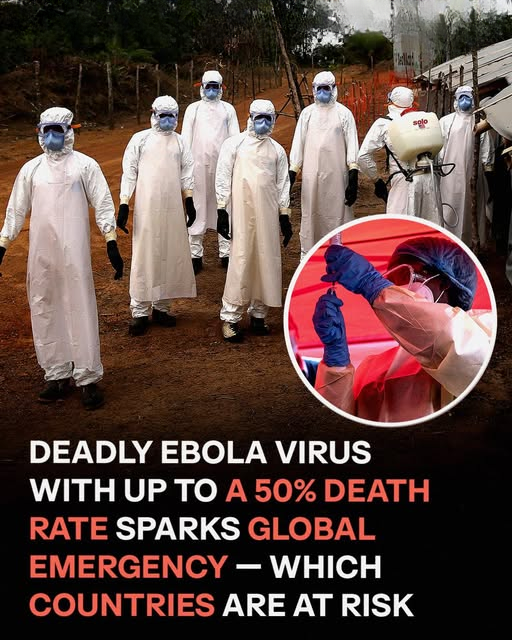
The World Health Organization (WHO) officially declared the Ebola outbreak in the Democratic Republic of Congo (DRC) and Uganda a Public Health Emergency of International Concern on May 17, 2026, following a sharp rise in infections and fatalities linked to the virus. The situation gained even more international attention after reports confirmed that an American doctor working in the affected region had tested positive for Ebola, marking the first known U.S. citizen infected during the current outbreak.
The infected physician, Dr. Peter Stafford, had been serving as a medical missionary with Serge, an international Christian missions organization operating in multiple countries worldwide. Stafford had been working at Nyankunde Hospital in Bunia, located in eastern DRC, since 2023. According to reports, he was exposed to the virus while treating patients during the early stages of the outbreak.
Health officials stated that Dr. Stafford began experiencing symptoms over the weekend before testing positive for Ebola on Sunday, May 18. Medical experts say healthcare workers are often among the most vulnerable during Ebola outbreaks because they regularly come into close contact with infected patients.
Dr. Stafford was one of three Serge medical missionaries working in the region when the outbreak escalated. His wife, Dr. Rebekah Stafford, and fellow medical missionary Dr. Patrick LaRochelle have not shown symptoms so far. All individuals connected to the exposure have reportedly followed strict quarantine and monitoring procedures since the risk was identified.
The group, including the Stafford family’s four children, is being relocated from the Democratic Republic of Congo to receive continued monitoring and specialized medical support. Health authorities have emphasized that all necessary precautions are being taken during transportation and observation to reduce any potential risk of transmission.
Joel Hylton, Senior Director of Mission for Serge, expressed gratitude for the dedication shown by the medical missionaries serving in the region. He also acknowledged the difficult conditions faced not only by international workers but also by local healthcare teams and residents who continue to confront the outbreak directly.
The United States government confirmed that Dr. Stafford would not be transported back to the U.S. for treatment. Instead, arrangements were made to transfer him to Germany, where specialized facilities experienced in treating Ebola patients are available. Officials noted that Germany’s previous experience handling Ebola cases, along with its closer proximity to Central Africa, played an important role in the decision.
Several individuals identified as high-risk contacts connected to the case are also being moved to Germany for monitoring and precautionary care. Public health authorities continue extensive contact tracing efforts to identify anyone who may have been exposed to the virus.
The outbreak has prompted an increased response from U.S. federal agencies. During a White House press briefing, President Donald Trump addressed concerns about the situation and stated that officials were monitoring developments closely. He noted that the outbreak currently appears largely confined to Africa but acknowledged the seriousness of the situation.
Following the briefing, Dr. Heidi Overton, deputy director of the White House Domestic Policy Council, provided additional details regarding the government’s response measures and preparedness efforts.
On May 18, the Centers for Disease Control and Prevention (CDC), together with the Department of Homeland Security and other agencies, introduced a temporary 30-day Title 42 order. The measure suspends entry into the United States for non-U.S. passport holders who have recently traveled to Uganda, the Democratic Republic of Congo, or South Sudan within the previous 21 days.
Officials explained that the temporary restriction is intended to reduce the possibility of Ebola entering the United States while health experts conduct further risk assessments and strengthen prevention strategies.
The CDC has also expanded health screenings and traveler monitoring procedures for people arriving from affected regions. Federal agencies are coordinating with airlines, airports, and port-of-entry officials to identify travelers who may require additional health evaluations.
Hospitals and healthcare systems across the United States have also been encouraged to review preparedness plans, enhance laboratory testing capacity, and ensure medical staff are trained to recognize Ebola symptoms and follow infection prevention protocols.
According to health authorities, Ebola spreads primarily through direct contact with bodily fluids from infected individuals or contaminated materials. Although the disease is not considered airborne under normal conditions, close contact environments can still create significant risks of transmission.
As of May 18, officials in the Democratic Republic of Congo reported 11 confirmed Ebola cases and 336 suspected cases connected to the outbreak. Authorities also confirmed 88 deaths linked to the virus.
Uganda has reported two confirmed cases, including one death. Both individuals had reportedly traveled from the Democratic Republic of Congo before becoming ill. At the time of reporting, Ugandan officials stated there was no evidence of widespread local transmission inside the country.
The outbreak first drew attention in early May after hospitals in Bunia’s health zone identified a cluster of severe illnesses among healthcare workers. Initial testing reportedly produced negative results for Ebola, creating uncertainty during the early stages of the investigation.
However, additional laboratory testing later confirmed the presence of the Bundibugyo virus, one of several Ebola-related viruses known to cause severe disease in humans.
Health experts say the Bundibugyo strain carries a historically high fatality rate ranging from approximately 25 percent to 50 percent. Unlike some other Ebola strains, there is currently no fully approved vaccine specifically designed for this variant, making containment efforts more challenging.
Treatment for infected patients mainly focuses on supportive medical care, including hydration, fever management, monitoring complications, and maintaining organ function during severe illness.
Authorities identified Mongwalu, located north of Bunia, as the outbreak’s primary epicenter. Suspected cases have also appeared in neighboring regions, including parts of North Kivu and other health zones across Ituri Province.
Public health experts warn that movement between communities, regional instability, and limited healthcare infrastructure may complicate efforts to contain the outbreak quickly.
The Democratic Republic of Congo has experienced multiple Ebola outbreaks since the virus was first identified in 1976. This latest emergency marks the country’s 17th recorded Ebola outbreak. The most recent previous outbreak officially ended in December 2025.
Only two earlier outbreaks have been linked specifically to the Bundibugyo strain — one in Uganda in 2007 and another in the DRC in 2015.
Symptoms of Ebola can initially resemble other common illnesses, making early diagnosis difficult in some cases. Patients may develop fever, severe headaches, fatigue, abdominal pain, vomiting, diarrhea, and muscle weakness. In more advanced stages, some patients experience internal bleeding, nosebleeds, or vomiting blood.
Health officials reported that many current patients in the DRC are adults between the ages of 20 and 39, with women accounting for a significant portion of cases.
International organizations including the WHO, CDC, and regional health agencies are continuing to support containment efforts through contact tracing, laboratory testing, emergency medical support, and public education campaigns.
Health authorities continue to stress that the overall risk to the general American public remains low. However, travelers to affected areas are being advised to avoid contact with sick individuals, follow official travel guidance, and seek medical attention immediately if symptoms develop.
Experts also emphasize the importance of strict infection prevention measures for healthcare workers and humanitarian personnel operating in outbreak zones.
Public health officials say rapid detection, isolation of infected individuals, and coordinated international cooperation remain essential to preventing further spread of the virus.
Global health agencies continue monitoring the situation closely as containment operations remain underway in the affected regions.