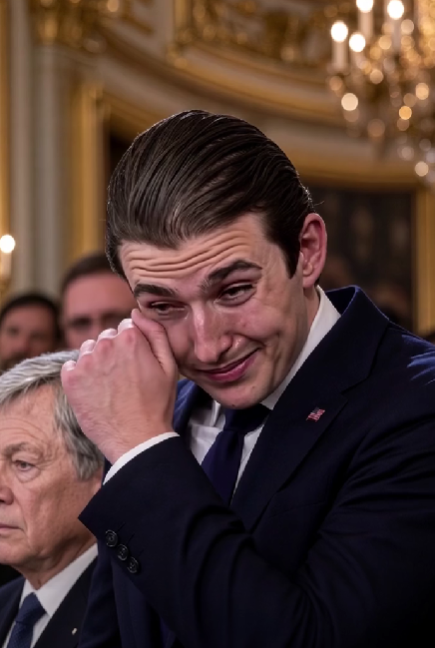
Iran-linked media have circulated graphic propaganda targeting Barron Trump, the 20-year-old son of President Donald Trump, deepening concerns about the security of the first family as the U.S.-Iran confrontation continues. Foreign reports describe a state-television segment, associated with outlets close to Iran’s Islamic Revolutionary Guard Corps, that maps locations tied to Barron, claims his movements are monitored, and refers to a $10 million bounty. The clip, reported under titles such as “Where to kill Barron Trump?,” has drawn wide attention online. Independent confirmation of the surveillance claims and the bounty itself remains limited.
What Happened
The latest material follows an earlier campaign against other family members. In July, Tasnim News Agency, widely linked to the IRGC, circulated a video titled along the lines of “Where to kill Melania?” that focused on First Lady Melania Trump’s public appearances in New York, alleged security patterns, and shops associated with her. That video ended with a direct warning aimed at Barron. Similar rhetoric has been directed at the president himself, including billboards and broadcasts vowing retaliation after the killing of Iran’s former supreme leader and years of hostility that date back to the 2020 strike on Qasem Soleimani.
The Reaction
The U.S. Secret Service has said it is aware of the Barron video and investigates any material that can be perceived as a threat to its protectees. Spokesman Nate Herring has declined to discuss specific measures, locations, or intelligence, citing operational security. Barron and Melania Trump receive Secret Service protection as immediate family of a sitting president. Security remains heavy at the White House, Trump Tower in New York, Mar-a-Lago in Florida, and the family’s New Jersey property, including the Bedminster club where Barron has spent part of the summer while attending New York University.
Officials and analysts treat such broadcasts as more than empty slogans. In a period of military and economic pressure—including sanctions, a naval presence near the Strait of Hormuz, and ongoing war rhetoric—online threats can function as intimidation, propaganda, and psychological warfare. Each item still has to be assessed for specificity and credibility. Unverified claims can still force agencies to review routines, harden protection, and monitor communications linked to Iran and its proxies. Barron has generally kept a low public profile compared with other members of the family, which makes the personal targeting especially striking.
What This Means
Authorities have released few details about any investigation. Protective work stays confidential by design. Reports of a bounty and of infiltrated social or gaming accounts have not been independently verified by Western outlets that reviewed the footage. Officials continue to watch Iran-linked messaging while urging caution about unsourced clips circulating on social media. The pattern, however, is clear: hostile rhetoric that once focused on U.S. officials is now being aimed more directly at their relatives, adding another layer of risk in an already tense security environment.
A disturbing video reportedly circulated by Iran-linked media has drawn renewed attention to the security of President Donald Trump’s family after Barron Trump, the president’s 20-year-old son, became the focus of threatening propaganda amid escalating tensions between the United States and Iran.
The footage, described in foreign media reports as a segment associated with outlets close to Iran’s Islamic Revolutionary Guard Corps (IRGC), allegedly references locations connected to Barron, claims that his movements are being monitored, and mentions a purported $10 million bounty.
The clip has circulated online under a chilling title translated as “Where to Kill Barron Trump?” sparking questions about the potential risks facing the president’s family and the growing use of threatening propaganda during international conflicts.
However, while the footage has attracted widespread attention, important details remain unverified. Independent confirmation of the alleged surveillance claims and the reported bounty has been limited, meaning the claims should not be treated as established facts.
Nevertheless, the reported video has placed the spotlight on a sensitive issue for American security officials: how threats directed at the relatives of political leaders can become part of a wider campaign of intimidation.
A Disturbing Escalation in Rhetoric Against the Trump Family
The reported targeting of Barron Trump follows earlier material aimed at other members of the president’s family.
In July, Iran-linked media outlet Tasnim News Agency circulated a video reportedly focusing on First Lady Melania Trump. The footage, described in reports as asking where she could be targeted, allegedly examined her public appearances in New York, referenced locations associated with her activities, and discussed aspects of her security arrangements.
The video reportedly ended with a warning directed toward Barron, raising concerns that the rhetoric was extending beyond the president and his political administration to include his immediate relatives.
The distinction is significant because family members of senior political figures can become targets of intimidation even when they have little involvement in the public decisions that drive international disputes.
Barron, in particular, has maintained a relatively private public profile compared with other members of the Trump family. Although his position as the president’s son naturally attracts public interest, he has generally remained outside the center of political debate.
That relative privacy makes the reported targeting especially concerning, as threats directed at someone who is not a prominent political spokesperson can raise difficult questions about personal safety, privacy, and the boundaries of political confrontation.
The latest footage also emerges against the background of years of hostility between Washington and Tehran.
Relations between the two countries deteriorated further after the January 2020 U.S. strike that killed Iranian military commander Qasem Soleimani. Iranian officials and Iran-linked outlets subsequently issued repeated statements threatening retaliation, while American officials continued to monitor potential threats connected to Iranian actors.
The killing of Iran’s former supreme leader, referenced in reports surrounding the latest rhetoric, has also been cited as part of the broader context for retaliatory messaging. The specific claims made in individual videos, however, require separate verification rather than being accepted simply because they appear within an established period of hostility.
Secret Service Responds to Reports of the Video
The reported footage has also drawn attention to the responsibilities of the United States Secret Service, the agency responsible for protecting the president and certain members of his immediate family.
According to reports, the agency is aware of the video involving Barron Trump and treats material that could be interpreted as a threat to its protectees as something requiring attention.
Secret Service spokesman Nate Herring reportedly declined to discuss specific protective arrangements, locations, or intelligence assessments, citing operational security.
Such restrictions are standard in sensitive protective matters. Revealing detailed information about an individual’s movements, security procedures, or the nature of an ongoing assessment could undermine the very protections authorities are responsible for maintaining.
Barron and Melania Trump receive Secret Service protection as members of the immediate family of a sitting president. Their security arrangements can involve assessments of potential threats, coordination with other agencies, and adjustments when circumstances require them.
The locations associated with the Trump family, including the White House, Trump Tower in New York, Mar-a-Lago in Florida, and the family’s New Jersey property, have all attracted attention because of their connection to the president and his relatives.
Barron has also spent time in New Jersey while attending New York University, according to reports. However, the existence of public reporting about a location does not establish that a person’s current movements are being tracked by a hostile actor.
Authorities have not publicly confirmed the alleged surveillance described in the circulating footage, and the absence of detailed official information means that the precise nature of any investigation remains unclear.
Why Threatening Propaganda Matters
Security analysts have long examined the role of propaganda during periods of international tension. Messages that appear designed to intimidate political leaders or their families can serve several purposes, including communicating hostility, influencing public perceptions, and attempting to create fear beyond the immediate political or military arena.
A video does not necessarily have to contain a credible operational plan to generate consequences.
Even when specific claims remain unsubstantiated, a threatening message can prompt security agencies to assess whether additional precautions are necessary. Officials must determine whether a communication represents empty rhetoric, an attempt to gather attention, or a potentially credible warning.
That assessment can require examining the source of the material, the language used, the specificity of its claims, and whether independent intelligence supports the information presented.
The reported video also illustrates how social media can amplify threatening content. Once a clip is shared across multiple platforms, its original context may become difficult to establish. Claims that were initially presented by a partisan or state-linked outlet can quickly circulate as though they have been independently confirmed.
This creates a challenge for both authorities and the public. The more alarming the language, the greater the temptation to interpret every detail as evidence of an immediate danger. Yet responsible reporting requires distinguishing between the existence of threatening rhetoric and proof that a specific plot is underway.
In Barron Trump’s case, the reported reference to a $10 million bounty is particularly striking. Such a claim naturally attracts attention, but the amount mentioned in a video does not establish that a genuine, enforceable, or operational bounty exists.
Similarly, reports suggesting that social media or gaming accounts may have been infiltrated have not been independently verified in the material described. Those allegations require evidence beyond the claims made in the footage itself.
Barron Trump’s Relative Privacy Adds Another Dimension
Unlike his father, Barron Trump has not occupied a comparable role in political messaging, public administration, or international diplomacy.
His public appearances have generally been less frequent, and his personal life has remained comparatively private. That has often made him a subject of public curiosity, particularly as he has grown older and begun his university studies.
Threatening rhetoric directed at him therefore raises broader questions about the treatment of relatives of public officials.
Political disputes frequently extend beyond the individuals directly involved, with family members sometimes becoming symbols in messaging campaigns. The purpose can be to communicate hostility toward an entire political family rather than to address a specific policy or decision.
However, relatives should not automatically be treated as responsible for the actions or statements of the public figures to whom they are related.
The reported video has renewed attention to that distinction, particularly at a time when relations between Washington and Tehran remain a source of international concern.
For Barron, the immediate issue is not the online attention itself but whether any claims made in the footage are supported by credible evidence and whether authorities identify a genuine security risk.
The Secret Service does not generally disclose every assessment or protective measure it undertakes. Consequently, the absence of detailed public updates should not be interpreted as confirmation that officials have taken no action.
What Happens Next?
For now, several central questions remain unanswered.
It is unclear whether the alleged bounty has any basis beyond the claims circulating online, whether the purported surveillance has been independently substantiated, or whether investigators have identified a specific and credible threat associated with the footage.
The Secret Service’s reported awareness of the material establishes that the video has attracted official attention, but it does not, by itself, demonstrate that a planned attack exists.
Authorities will need to assess the material according to its credibility and any corroborating information available to them. That process is especially important when communications emerge from sources operating within a broader propaganda environment.
The wider context is equally significant. Military pressure, economic sanctions, maritime tensions around the Strait of Hormuz, and hostile political rhetoric can all contribute to an atmosphere in which threats become more frequent and difficult to evaluate.
Against that backdrop, messages aimed at the families of political leaders can take on a significance beyond their immediate audience.
The reported targeting of Barron Trump highlights how international confrontation can spill into the personal lives of people connected to those in power. It also demonstrates why claims about surveillance, financial rewards, and potential violence must be examined carefully rather than repeated as confirmed intelligence.
For the Trump family, the priority remains security and privacy. For investigators, the challenge is determining whether the alarming language represents propaganda alone or something requiring further protective action.