Senate Grapples with Presidential Authority After U.S. Operation in Venezuela Ignites Constitutional Debate
In early 2026, a dramatic and controversial U.S. operation in Venezuela set off one of the most intense constitutional debates in recent American political history. What began as a high-risk mission to detain a foreign leader quickly evolved into a far-reaching dispute over presidential authority, congressional oversight, and the boundaries between law enforcement and acts of war. The incident has placed the United States Senate at the center of a national conversation about the separation of powers and the evolving nature of modern conflict.
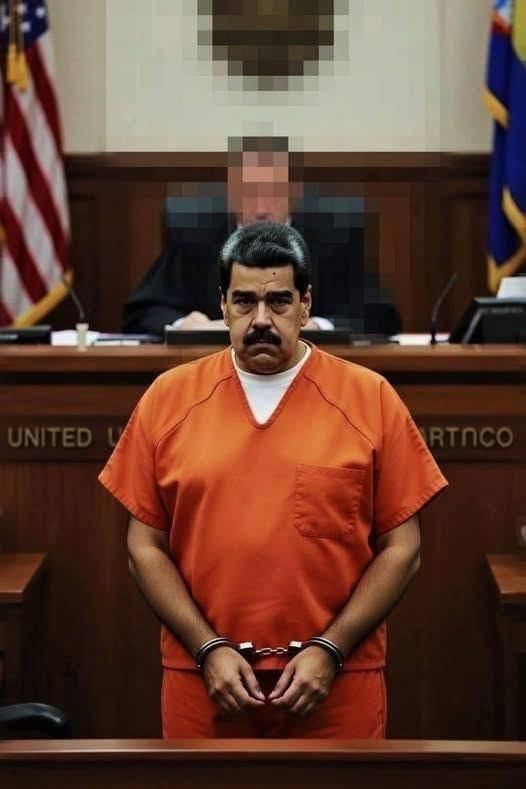
The operation itself was carried out under a veil of secrecy and precision. In the early hours of January, highly trained U.S. forces conducted a swift and coordinated raid in Caracas, targeting Venezuelan leader Nicolás Maduro. The mission resulted in his capture, along with his spouse, and their subsequent transfer to the United States, where they were to face longstanding allegations related to narcotics trafficking and corruption. While the administration described the mission as a lawful enforcement of criminal indictments, the scale and method of the operation immediately raised serious questions.
Critics argued that the use of military assets—including advanced aircraft and elite special operations units—constituted more than a simple law enforcement action. Instead, they viewed it as a de facto act of war, particularly given that it involved entering a sovereign nation without its consent and removing its sitting head of state. This interpretation sparked alarm among lawmakers, legal scholars, and international observers, who questioned whether the executive branch had exceeded its constitutional authority by acting without congressional approval.
The controversy intensified as members of Congress began to scrutinize the legal justification for the operation. Central to the debate was the War Powers Resolution, a law designed to limit the president’s ability to engage U.S. forces in hostilities without consulting Congress. A bipartisan group of senators introduced a resolution aimed at reasserting congressional authority by requiring explicit approval for any further military involvement in Venezuela.
The Senate floor soon became the stage for a heated and highly visible confrontation. Lawmakers from both parties expressed concern about the precedent set by the operation. Some argued that allowing the president to unilaterally carry out such actions could erode the constitutional balance of power. Others maintained that the unique circumstances of the case—particularly the criminal charges against Maduro—justified swift executive action.
Supporters of the administration emphasized that the mission was narrowly focused and limited in scope. They argued that it did not constitute “hostilities” as traditionally defined, since U.S. forces were not engaged in prolonged combat and did not remain in Venezuelan territory after the operation. From this perspective, the War Powers Resolution was not applicable, and the president acted within the bounds of his authority to enforce U.S. law and protect national security interests.
Opponents, however, rejected this characterization. They contended that the distinction between law enforcement and military action becomes blurred when armed forces are deployed across international borders. Removing a foreign leader by force, they argued, cannot be separated from its geopolitical implications. To them, the operation represented a dangerous expansion of executive power under the guise of legal enforcement.
The debate reached a critical point when the Senate voted on the proposed War Powers Resolution. The outcome reflected the deep divisions within the chamber. Despite initial bipartisan support, political pressure and shifting alliances led to a tied vote. The vice president ultimately cast the deciding vote, blocking the resolution and allowing the administration to retain its current level of authority.
Although the resolution did not pass, the narrow margin underscored the intensity of the disagreement and the uncertainty surrounding the limits of presidential power. Many lawmakers signaled that the issue was far from settled, with some pledging to pursue further legislative action or seek judicial review.
Beyond the domestic political arena, the operation had significant international repercussions. Legal experts raised concerns about the implications for international law and norms governing the use of force. The idea that one country could unilaterally capture the leader of another sovereign nation, without multilateral approval or clear justification under international frameworks, was seen by many as a troubling precedent.
Diplomats warned that such actions could encourage other nations to adopt similar tactics, potentially destabilizing global relations. If widely replicated, this approach could undermine established principles of sovereignty and non-intervention, increasing the risk of conflict. Several countries expressed unease, even among traditional allies, highlighting the broader diplomatic fallout of the operation.
In Latin America, the reaction was particularly pronounced. Protests erupted in multiple cities, with demonstrators criticizing what they viewed as an overreach of U.S. power. The event reignited longstanding debates about foreign intervention in the region and the role of the United States in shaping political outcomes abroad.
Within Venezuela, the situation remained fluid and uncertain. The removal of Maduro created a power vacuum, prompting efforts to establish a transitional government. U.S. officials engaged with interim leadership in an attempt to stabilize the country and prevent further unrest. However, the long-term prospects for political stability remained unclear, as internal divisions and external pressures continued to shape the evolving landscape.
Symbolic gestures also played a role in shaping public perception of the operation. High-profile meetings and public statements framed the event as a triumph for democratic values and accountability. Supporters portrayed it as a decisive step against corruption and authoritarianism, while critics viewed it as a calculated political move with significant risks.
As the immediate aftermath unfolded, attention turned to the broader constitutional implications. The central question—where to draw the line between executive authority and congressional oversight—remained unresolved. Advances in military technology and the increasing use of targeted operations have complicated traditional definitions of war and conflict, making it more difficult to apply existing legal frameworks.
Some scholars argue that current laws, including the War Powers Resolution, may be outdated in the context of modern warfare. Precision strikes, cyber operations, and rapid-response missions challenge the notion of sustained hostilities, creating ambiguity about when congressional approval is required. Others maintain that these developments make it even more important to reinforce checks and balances, ensuring that no single branch of government can unilaterally decide matters of such consequence.
In the House of Representatives, lawmakers began drafting their own proposals to address these concerns. Legal experts suggested that the issue could eventually reach the Supreme Court, where it would test the judiciary’s role in interpreting the separation of powers in an evolving security environment.
The debate also raised fundamental questions about accountability and transparency. Critics argued that decisions of this magnitude should involve broader deliberation and input from elected representatives. They expressed concern that bypassing Congress not only weakens institutional oversight but also limits public understanding of the rationale behind such actions.
Supporters countered that the nature of certain operations requires secrecy and speed, which may not be compatible with lengthy legislative processes. They argued that the president must retain the flexibility to respond to emerging threats and enforce the law, particularly when timing is critical.
Ultimately, the operation in Venezuela has become more than a single घटना; it is a defining moment in the ongoing evolution of American governance. It highlights the tension between efficiency and accountability, between decisive action and democratic deliberation. The outcome of this debate will likely shape the contours of U.S. foreign policy and constitutional interpretation for years to come.
While the mission itself may be viewed by some as a tactical success, its broader implications are still unfolding. The questions it has raised about the limits of executive power, the role of Congress, and the application of international norms will continue to resonate across political, legal, and diplomatic arenas.
As policymakers, scholars, and citizens reflect on the घटना, one thing is clear: the balance of power within the U.S. government is being tested in new and unprecedented ways. Whether this moment leads to a recalibration of authority or further consolidation of executive power remains to be seen. What is certain, however, is that the debate sparked by this operation will have lasting consequences, shaping not only how the United States conducts itself abroad but also how it defines the principles of its own constitutional system.