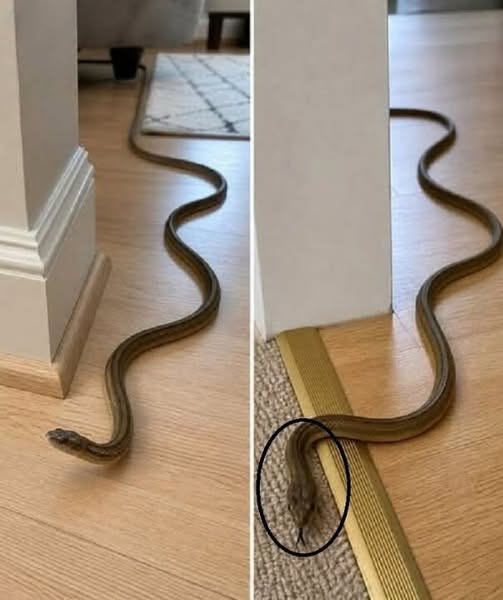
Finding a snake inside a home can be a startling and emotionally intense experience for most people. Even individuals who generally feel calm around wildlife often react with surprise, fear, or confusion when encountering a snake in an unexpected indoor space. Whether the sighting occurs in a kitchen, garage, basement, garden shed, or even a living room, the moment tends to leave a strong impression and is often remembered for years afterward.
In many cultures, snakes carry symbolic meanings that have been passed down through generations. Some traditions associate them with transformation, others with danger, and some even interpret their appearance as a sign of luck or misfortune. These interpretations, however, belong to folklore and belief systems rather than scientific understanding. There is no verified evidence that a snake entering a home has any spiritual or predictive meaning related to a person’s future, financial status, or personal life events.
From a biological and ecological perspective, snakes are not mysterious intruders acting with intention toward humans. They are animals responding to environmental conditions and survival needs. When a snake is found indoors, it is almost always due to practical factors such as the search for food, shelter, temperature regulation, or accidental movement through accessible entry points. Understanding these reasons can significantly reduce fear and help people respond in a safer, more informed way.
This article explores in detail why snakes may enter residential spaces, what attracts them, how they behave, and what steps can be taken to prevent encounters. It also explains how to react calmly and responsibly if a snake is discovered inside or near a home.
Understanding Snake Behavior Around Human Spaces
One of the most common misunderstandings about snakes is the idea that they actively seek out human beings or intentionally invade homes. In reality, snakes do not recognize humans as a target or objective. Their behavior is driven almost entirely by survival instincts rather than curiosity or aggression.
Most snake species naturally prefer to avoid human contact. Humans are large predators in the eyes of wildlife, and snakes typically rely on concealment and retreat as their primary defense mechanism. When given the opportunity, they will usually move away quietly rather than confront or engage.
If a snake is found inside a building, it is rarely because it intentionally entered the space with purpose. Instead, it is more likely that it moved through an open or unnoticed passage while following environmental cues such as warmth, scent trails of prey, or shelter opportunities. In some cases, the snake may have entered accidentally and become disoriented.
Understanding this behavior helps reduce panic. A snake indoors is not acting out of malice or targeting people; it is simply trying to survive in an environment that may have become accessible to it.
Why Snakes Enter Homes: The Role of Survival Needs
Like all animals, snakes depend on basic survival requirements. These include food, water, shelter, and suitable environmental conditions. When these needs are met or suggested within human environments, snakes may be drawn closer to residential areas.
Food Availability
Food is one of the strongest motivating factors influencing snake movement. Different species of snakes feed on a variety of prey, including rodents, small birds, lizards, amphibians, and insects. The specific diet depends on the species and local ecosystem, but the general principle remains the same: snakes follow food sources.
Residential areas often unintentionally provide abundant feeding opportunities. For example, homes or gardens with rodent activity can attract snakes that prey on mice or rats. Similarly, outdoor environments with frogs or insects may also draw snakes closer.
Rodent populations are particularly influential. Where there are mice or rats, snakes are likely to follow. This is part of natural ecological balance, as snakes help control pest populations. However, when rodents are present near or inside homes, the likelihood of snake encounters increases.
Maintaining proper sanitation, securely storing food, and managing waste effectively can reduce rodent activity, which indirectly reduces the chance of attracting snakes.
Shelter and Protection From Environmental Conditions
Another important reason snakes may approach or enter homes is the search for shelter. Snakes are ectothermic, meaning they rely on external environmental conditions to regulate their body temperature. Because of this, they are highly sensitive to extreme weather changes.
During very hot periods, snakes may seek cooler environments to avoid overheating. Conversely, during colder seasons or sudden temperature drops, they may look for warmer, insulated spaces to conserve energy and maintain body function.
Residential structures such as basements, crawl spaces, garages, sheds, and storage areas can unintentionally provide ideal shelter conditions. These spaces often remain undisturbed, quiet, and protected from environmental extremes, making them attractive resting spots for wildlife.
It is important to note that this does not indicate a problem with the home itself. Rather, it reflects the adaptability of snakes and their ability to take advantage of temporary environmental advantages.
Entry Points: How Snakes Get Inside Buildings
Many people are surprised to learn how easily snakes can enter homes. Buildings often have small structural openings that go unnoticed during daily life. These gaps can serve as entry points for wildlife.
Common access routes include spaces beneath doors, cracks in foundations, damaged ventilation covers, gaps around plumbing or wiring, open garage doors, and unsealed utility entrances. Even small structural imperfections can be sufficient for certain snake species to pass through.
Snakes are flexible animals, and their bodies are not rigid like many other vertebrates. This allows them to squeeze through surprisingly narrow openings. If a gap is large enough for their head to pass through, the rest of the body can often follow.
Because of this, regular home maintenance plays an important role in prevention. Sealing gaps, repairing damaged structures, and ensuring proper door and vent fittings can significantly reduce the likelihood of wildlife entering indoor spaces.
Gardens and Outdoor Spaces as Transitional Habitats
Outdoor areas surrounding a home can also influence snake presence. Gardens, yards, and landscaped spaces often provide suitable habitat conditions for small wildlife, which in turn can attract snakes.
Overgrown grass, dense vegetation, wood piles, stone arrangements, compost heaps, and stacked firewood can all create hiding places for rodents, insects, and other small animals. These areas effectively form micro-ecosystems that support food chains, including predators such as snakes.
A well-maintained garden does not eliminate wildlife entirely, but it can reduce the likelihood of creating ideal hiding or nesting conditions. Keeping grass trimmed, organizing storage materials, and reducing clutter in outdoor spaces can make the environment less appealing to prey animals, thereby indirectly reducing snake activity.
The Role of Water Sources
Water is another environmental factor that can influence wildlife movement. While snakes do not typically seek water for consumption in the same way humans do, they are often found near water sources because those areas support prey species.
Bird baths, ponds, irrigation systems, leaking pipes, and areas of standing water can attract insects, frogs, and small animals. These, in turn, become food sources for snakes.
Therefore, the presence of water itself is not usually the direct attraction. Instead, it is the ecosystem supported by water that creates favorable conditions. Managing standing water and maintaining proper drainage can help reduce the presence of prey animals near homes.
Snake Behavior: Calm, Defensive, and Avoidant
A widespread misconception is that snakes are naturally aggressive toward humans. In reality, most snakes are defensive rather than offensive. Their primary instinct is to avoid confrontation whenever possible.
When a snake feels threatened or cornered, it may remain motionless, attempting to blend into its surroundings. This stillness is a survival strategy designed to avoid detection. In other situations, a snake may attempt to flee quickly to a safer location.
Defensive behaviors such as hissing, body coiling, or mock strikes are typically warning signals rather than attempts to attack. These behaviors are intended to discourage perceived threats rather than initiate conflict.
Because of this, the safest approach when encountering a snake is to maintain distance and avoid provoking or handling it. Even non-venomous species can bite if they feel threatened, so caution is always appropriate.
Safe Response If a Snake Is Found Indoors
If a snake is discovered inside a home, the most important action is to remain calm and avoid sudden movements. Panic can lead to unsafe decisions, increasing risk for both humans and the animal.
It is advisable to keep a safe distance and ensure that children and pets are removed from the area. The snake should not be cornered or provoked, as this may cause defensive behavior.
In many cases, the safest solution is to contact local wildlife professionals or trained animal control services who can handle relocation safely and responsibly. Attempting to capture or remove a snake without experience can be dangerous.
Once the situation is under control, it is useful to identify how the snake entered the home and take preventive measures to avoid recurrence.
Prevention and Long-Term Management
Preventing future snake encounters involves a combination of environmental management and structural maintenance. This includes sealing entry points, reducing rodent populations, maintaining clean outdoor spaces, and organizing stored materials properly.
Regular inspections of basements, garages, and exterior walls can help identify vulnerabilities before they become entry routes. Landscaping adjustments, such as reducing dense ground cover near the house, can also contribute to lowering risk.
While it is impossible to completely eliminate wildlife presence in areas where ecosystems exist, it is possible to significantly reduce unwanted indoor encounters through consistent maintenance.
Conclusion
A snake inside a home can be an unexpected and memorable event, but it is important to understand it through a practical and ecological lens rather than fear or superstition. Snakes do not enter homes with intent to harm people or fulfill symbolic meanings. Instead, they respond to environmental conditions such as food availability, shelter opportunities, temperature changes, and accessible entry points.
By understanding their behavior and the reasons behind their movement, it becomes easier to respond calmly and take appropriate action. With proper awareness, prevention, and respect for wildlife, encounters can be managed safely while maintaining a balanced relationship with the natural environment.