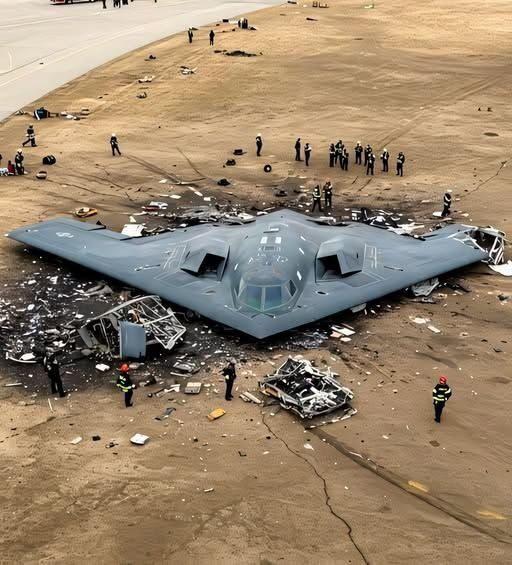
For many years, claims have circulated online suggesting that the B-2 Spirit stealth bomber was secretly shot down during a classified military mission. These allegations frequently appear on discussion forums, social media platforms, and alternative news sites, often presented as suppressed information or concealed wartime losses. Despite their persistence and dramatic framing, no reliable evidence has ever demonstrated that a B-2 Spirit has been destroyed by enemy action. Every confirmed loss involving the aircraft has been publicly attributed to accidents or technical malfunctions rather than combat.
The B-2 Spirit is not a conventional military aircraft. Known formally as the Northrop Grumman B-2 Spirit, it represents one of the most technologically advanced and expensive weapons systems ever developed. Designed during the latter years of the Cold War, its primary purpose was to penetrate dense and highly sophisticated air defense networks without detection. Its engineering, operational planning, and combat history make unsupported claims of it being casually shot down highly implausible. Careful examination of documented incidents and publicly available evidence shows no indication of hostile destruction.
Understanding the origins of these rumors requires separating verified events from speculation. Only two serious incidents involving the B-2 have resulted in significant damage or loss, and both were thoroughly investigated. The first confirmed total loss occurred on February 23, 2008, at Andersen Air Force Base in Guam. Shortly after takeoff, the aircraft experienced a malfunction and crashed near the runway. Both pilots successfully ejected and survived, reflecting the effectiveness of safety protocols and emergency systems.
An official investigation by the U.S. Air Force concluded that the crash was not caused by pilot error, sabotage, or enemy action. Instead, moisture had entered critical air data sensors. These sensors feed information such as airspeed and angle of attack into the flight control computers. Because the data became corrupted, the aircraft’s automated systems miscalculated performance parameters during takeoff. The plane rotated prematurely, stalled, and fell back to the ground. The aircraft, valued at approximately $1.4 billion, was declared a total loss. Importantly, investigators found no evidence of external interference or hostile engagement.
A second serious incident occurred on September 14, 2021, at Whiteman Air Force Base in Missouri, which serves as the primary home of the B-2 fleet. During landing, another B-2 sustained damage and was temporarily removed from operational status while authorities conducted a review. Due to national security considerations, only limited details were released publicly. However, military officials clearly stated that the event was unrelated to combat operations and involved no hostile activity. Although online speculation quickly emerged, no credible source presented verifiable proof of enemy involvement.
Rumors often reference past conflicts, particularly NATO operations over Serbia in 1999. During that campaign, a U.S. stealth aircraft was shot down. However, the aircraft in question was the Lockheed F-117 Nighthawk, not a B-2. The distinction is significant. The F-117 relied on earlier stealth technology and operated within more predictable flight patterns. The B-2 incorporates more advanced design features and mission planning capabilities. Conflating the two aircraft contributes to misunderstanding and fuels inaccurate narratives.
The B-2’s design plays a central role in its survivability. Its flying-wing configuration eliminates vertical stabilizers and other structures that typically reflect radar signals. By minimizing sharp angles and external protrusions, the aircraft dramatically reduces its radar cross-section. Radar-absorbing materials applied to its surface further decrease detectability by converting incoming radar energy into heat rather than reflecting it back to the source. On radar systems, the B-2 may appear extremely small, complicating efforts to track it consistently.
Infrared detection is also addressed in its engineering. The engines are embedded deep within the wing structure, and the exhaust is carefully cooled and dispersed to reduce thermal signatures. This makes heat-seeking missiles less effective compared to their performance against conventional aircraft. Additionally, the B-2 typically operates at high altitudes, beyond the optimal engagement envelope of many surface-to-air missile systems.
Electronic countermeasures add another layer of protection. Although the exact capabilities remain classified, the aircraft is known to carry systems designed to disrupt, jam, or confuse enemy radar and targeting networks. Mission planners rely on extensive satellite intelligence, reconnaissance data, and route optimization to minimize exposure to threats. The aircraft’s operational philosophy emphasizes avoiding detection rather than engaging directly with defensive systems.
Throughout its service history, the B-2 has participated in multiple military operations. It conducted strikes during the conflict in Kosovo in 1999, later flew missions over Iraq and Afghanistan, and was used in operations in Libya. In each case, the aircraft targeted heavily defended objectives while maintaining a record free of confirmed combat losses. Given the small fleet size—fewer than two dozen were produced—any verified shootdown would represent a significant strategic event with broad international implications.
Modern military operations generate extensive documentation. Satellite imagery, radar records, pilot communications, and intelligence assessments make it extremely difficult to conceal the destruction of a high-profile aircraft indefinitely. Allied nations, defense analysts, and independent observers routinely monitor such developments. The absence of credible evidence, declassified documentation, or corroborated testimony strongly indicates that no B-2 has been shot down in combat.
Part of the reason conspiracy theories endure is the secrecy that surrounds advanced military technology. Because many details about the B-2 remain classified, gaps in public knowledge can create space for speculation. In the digital era, unverified claims can spread rapidly through online platforms, sometimes gaining traction simply through repetition. However, repetition does not equal proof. Reliable information requires documented sources and verifiable facts.
It is also important to consider the strategic consequences that would follow a confirmed shootdown. Recovery efforts, diplomatic responses, and intelligence assessments would likely involve multiple countries. The loss of such a costly and technologically advanced platform would prompt extensive discussion in defense communities worldwide. The complete absence of such corroborated evidence further weakens claims of a hidden combat loss.
As defense technology evolves, the United States continues to develop next-generation systems. The forthcoming Northrop Grumman B-21 Raider is expected to complement and eventually replace the B-2 fleet. Even so, the B-2 Spirit remains a powerful symbol of aerospace innovation and strategic deterrence. Its unique appearance and classified capabilities contribute to its mystique, which in turn can make it a frequent subject of speculation.
Ultimately, the available evidence supports a straightforward conclusion. The B-2 Spirit has not been shot down by enemy fire. The only confirmed loss resulted from a documented technical malfunction, and subsequent incidents have been attributed to non-combat causes. No verified intelligence, official report, or credible investigation has demonstrated otherwise.
Rumors often persist because they appeal to curiosity and intrigue, especially when they involve advanced military systems operating under conditions of secrecy. However, responsible analysis requires reliance on confirmed facts rather than anonymous claims or recycled misinformation. The B-2 Spirit’s operational record, supported by official investigations and decades of service history, shows no confirmed instance of combat destruction.
In summary, while online narratives may continue to suggest hidden losses or suppressed wartime incidents, such claims remain unsupported. The documented history of the B-2 Spirit reflects rare but explainable technical accidents—not enemy shootdowns. Everything beyond those verified events falls into the realm of speculation rather than substantiated reality.