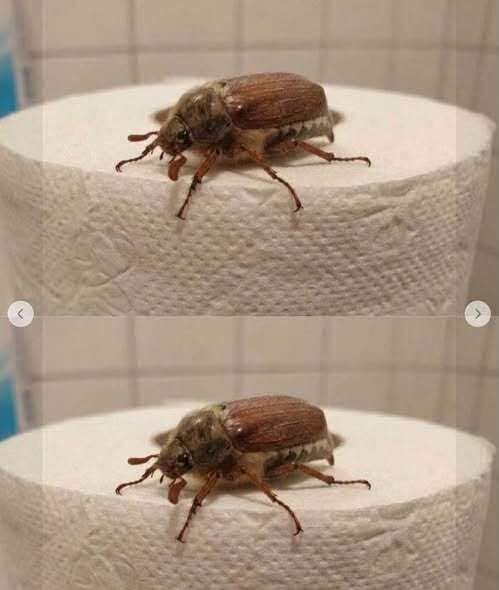
At first glance, the insect in the photo may look alarming because of its large size and sturdy body. However, many beetles that accidentally enter homes are harmless to people. The beetle shown appears to belong to a group commonly known as scarab or chafer beetles, which are frequently seen during the warmer months of the year. These insects are attracted to outdoor lights and can occasionally find their way indoors through open doors, windows, or small gaps around a house.
Although finding a large beetle in your bathroom or on a roll of toilet paper can be surprising, there is usually no reason to panic. Understanding what these insects are, why they appear, and how to prevent them from entering your home can make the experience much less stressful.
Identifying the Beetle
The beetle in the image has several features that are common among scarab beetles:
- A hard brown shell that protects its wings.
- A rounded, oval-shaped body.
- Six strong legs designed for digging and climbing.
- Short antennae that help detect food and mates.
- A tough outer skeleton that protects it from predators.
Depending on your location, similar-looking beetles may include June beetles, May beetles, or other chafer species. While exact identification requires close examination, they generally share similar habits and behaviors.
Why Beetles Enter Homes
Most beetles do not intentionally invade houses. Instead, they wander indoors for several common reasons.
Attraction to Lights
Outdoor lighting is one of the biggest reasons beetles gather around homes. Porch lights, garden lights, and illuminated windows attract flying insects after sunset. Once near the house, they may accidentally enter through an open door or window.
Seasonal Activity
Many large brown beetles are most active during late spring and summer. Their adult life is often relatively short, during which they search for food and mates before laying eggs.
Weather Conditions
Heavy rain, unusually hot temperatures, or strong winds may encourage insects to seek temporary shelter. During these periods, homeowners may notice more beetles indoors than usual.
Open Entry Points
Small gaps around doors, damaged window screens, attic vents, and foundation cracks provide easy access for insects.
Are These Beetles Dangerous?
In most situations, these beetles are considered harmless.
They generally do not:
- Bite humans.
- Spread diseases.
- Damage furniture.
- Attack pets.
If handled roughly, some beetles may grip with their legs or produce a harmless defensive odor, but they are not aggressive.
For healthy individuals, simply encountering one indoors is not considered a health risk.
What Do They Eat?
Adult scarab beetles often feed on:
- Leaves
- Flowers
- Tree foliage
- Fruits
- Plant material
Their larvae, commonly called white grubs, usually live underground where they feed on grass roots and other plant roots. In gardens or lawns, large populations of grubs may damage turf by weakening root systems.
Why Was It Found in the Bathroom?
Bathrooms can occasionally attract insects because they are cool, humid spaces.
A beetle may have wandered there after entering through:
- An open window.
- A nearby hallway.
- A gap beneath the door.
- An attic or roof space.
The toilet paper roll simply provided a convenient elevated surface where it stopped to rest.
How to Remove the Beetle Safely
If you find a beetle indoors, there is no need to use harsh chemicals immediately.
Instead:
- Place a glass or container over the beetle.
- Slide a stiff piece of paper underneath.
- Carry it outside.
- Release it in a garden or wooded area away from the house.
This method protects both the insect and anyone handling it.
Preventing Future Visitors
Simple maintenance can greatly reduce the chances of insects entering your home.
Seal Entry Points
Inspect your home for:
- Small wall cracks.
- Damaged weather stripping.
- Torn window screens.
- Gaps around utility pipes.
- Spaces beneath exterior doors.
Repairing these openings limits insect access.
Reduce Outdoor Lighting
Using warm-colored LED bulbs or turning unnecessary lights off at night can reduce the number of flying insects attracted to your property.
Keep Doors Closed
Avoid leaving exterior doors open for long periods during evenings when beetles are most active.
Maintain Your Yard
Healthy lawn care can help reduce beetle breeding areas.
Consider:
- Proper mowing.
- Avoiding overwatering.
- Removing piles of decaying leaves.
- Cleaning up fallen fruit.
Interesting Facts About Scarab Beetles
These insects are surprisingly fascinating.
Some interesting facts include:
- Scarab beetles have existed for millions of years.
- Thousands of species live around the world.
- Their hard wing covers are called elytra.
- Many species are excellent fliers despite their bulky appearance.
- Some scarabs play important ecological roles by recycling organic matter.
Their Role in Nature
Although homeowners may view beetles as pests, they contribute to healthy ecosystems.
Many species:
- Help break down organic material.
- Serve as food for birds and small mammals.
- Support soil health.
- Participate in nutrient recycling.
Even species that spend part of their lives feeding on plants are part of natural food webs.
Should You Call Pest Control?
Usually, a single beetle indoors is not a sign of an infestation.
Professional pest control may be worth considering if:
- Large numbers appear repeatedly.
- Beetles are causing noticeable lawn damage.
- Grubs are destroying grass roots.
- You cannot determine how insects are entering your home.
Most isolated encounters require nothing more than safely removing the insect and sealing entry points.
Common Myths
Several misconceptions surround large beetles.
Myth: All large beetles bite people.
Fact: Most scarab beetles do not bite humans.
Myth: One beetle means your house is infested.
Fact: A lone beetle often entered accidentally.
Myth: They carry dangerous diseases.
Fact: Most common scarab beetles are not known for spreading diseases to people.
Myth: Every brown beetle destroys wooden furniture.
Fact: Wood-boring beetles belong to different groups, and many scarab beetles do not feed on wood inside homes.
Appreciating Wildlife
While insects may not be welcome guests indoors, they are an important part of biodiversity. Observing a beetle up close can reveal remarkable details, from its protective shell to its specialized legs and antennae. These adaptations have helped beetles become one of the most successful groups of animals on Earth.
The next time you encounter a large brown beetle like the one in the photo, remember that it is most likely an accidental visitor rather than a dangerous intruder. By calmly removing it, checking for possible entry points, and making a few simple adjustments around your home, you can reduce future encounters while allowing these beneficial insects to continue playing their role in the natural environment. This balanced approach helps protect both your living space and the local ecosystem.