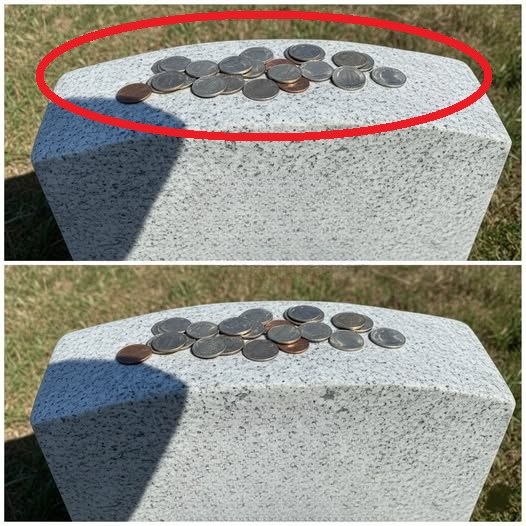
Walking through a cemetery, especially one dedicated to military service members, you may notice small coins resting atop gravestones. At first glance, these coins might seem like random offerings or inconsequential marks left by visitors. Yet, this simple act carries a profound significance. Each coin — whether a penny, nickel, dime, or quarter — represents more than monetary value; it conveys respect, remembrance, and a silent acknowledgment of life and sacrifice.
This quiet tradition has endured for generations, bridging cultures and historical periods. It is particularly meaningful in military cemeteries, where the bonds between service members and their families are honored in understated but deeply symbolic ways. Exploring this practice reveals a rich language of remembrance and a connection between the living and those who have passed.
The Significance of Coins on Gravestones
What may appear as a casual gesture often holds specific meanings. The type of coin placed on a grave can convey messages ranging from simple remembrance to acknowledgment of shared service or even intimate bonds forged in combat.
A Token of Memory
The penny, often the most frequently left coin, symbolizes the simplest but most profound act: “I remember you.” Its small monetary value contrasts with its emotional weight. Leaving a penny on a gravestone signifies that someone has visited, paused, and acknowledged the life of the deceased.
For families, especially those who have lost loved ones in military service, seeing pennies left by strangers can provide a quiet reassurance. It communicates that the sacrifice and memory of their loved ones are not forgotten, offering emotional comfort in a tangible, visible way.
Comradeship and Shared Experience
A nickel carries a slightly deeper meaning. In military contexts, it represents a shared connection between the person leaving the coin and the deceased. This may indicate that the two served together during training, boot camp, or early stages of military service.
The nickel becomes a silent acknowledgment of mutual respect, camaraderie, and shared experiences that extend beyond life itself. It honors the relationships built in challenging circumstances, reflecting the unique bonds formed in military service.
Bonds Forged in Combat
A dime takes the sentiment further, signifying that the coin-leaver and the deceased fought side by side. Combat creates profound and often lifelong bonds, as soldiers rely on each other for survival and support in dangerous situations.
Leaving a dime on a grave communicates that the two shared these experiences intimately. It is an acknowledgment of loyalty, bravery, and the deep personal connections that are forged in the most extreme conditions.
Witnessing the Final Moments
The quarter is considered the most significant coin, carrying the weightiest emotional meaning. This coin indicates that the visitor was present at the time of the soldier’s passing or shared the most profound moments of their life. It is a tribute to ultimate sacrifice and unwavering commitment, often reserved for those with the closest ties to the deceased.
Practical Implications of the Tradition
Beyond emotional and symbolic meanings, the practice of leaving coins on gravestones has practical implications.
Comfort for Families
For grieving families, the presence of coins can be a source of solace. Knowing that others remember their loved ones—even strangers—reinforces the idea that life and service are not forgotten. The tradition allows families to feel connected across distance and time, sustaining the memory of their loved ones in a meaningful way.
Contributions to Veterans’ Causes
In some cemeteries, particularly those focused on military service, coins are occasionally collected and donated to veteran-focused organizations. Over time, these small offerings can accumulate into meaningful contributions, supporting healthcare, housing, and education for veterans. This dual role—honoring the deceased while supporting the living—adds a practical and charitable dimension to the tradition.
Historical and Cultural Roots
The practice of leaving coins on graves is steeped in history, with roots in both ancient and modern customs.
Ancient Burial Traditions
In classical antiquity, coins were placed on the eyes or in the mouths of the deceased, often intended as payment for Charon, the mythological ferryman of the underworld. This symbolic payment allowed souls to cross into the afterlife safely, representing a spiritual and cultural respect for the dead.
Military Symbolism
The tradition evolved in modern times, particularly after the Vietnam War, as a discreet way for service members to honor fallen comrades. Coins allowed for a subtle, silent tribute, avoiding elaborate displays while communicating solidarity and respect. Over time, this became a standardized practice in military cemeteries worldwide.
Tips for Visitors
Understanding the symbolism behind coins can enhance your appreciation of this quiet tradition:
- Do Not Remove Coins – Each coin is intentionally placed. Taking it diminishes the respect intended by the gesture.
- Learn the Meaning – Pennies symbolize remembrance, nickels shared service, dimes combat companionship, and quarters signify being present at the soldier’s death.
- Respect the Practice – Whether in a military or civilian cemetery, recognize that this is a meaningful ritual. Pausing to reflect on the story behind each coin deepens the experience of visiting.
Conclusion: A Silent Language of Respect
The tradition of leaving coins on gravestones is a small but powerful act of remembrance. From the humble penny to the symbolic quarter, each coin conveys a story of connection, respect, and memory. It is a simple gesture that honors life, service, and sacrifice in a way that transcends words.
Next time you encounter a coin on a gravestone, consider the quiet message it carries: someone remembered, someone respected, and someone’s story endures. Through this practice, the past communicates with the present, creating a lasting, meaningful connection between generations.
Stories Behind the Coins: Personal and Historical Narratives
Beyond symbolism, many coins carry deeply personal stories, often left by individuals with intimate connections to the deceased. In military cemeteries, letters and coins are sometimes left together, though the coin itself speaks volumes in silence. Veterans visiting the graves of old comrades have recounted that leaving a coin is a way to convey emotions too complex for words—grief, respect, loyalty, and enduring friendship.
For example, some soldiers have described leaving a quarter on the grave of a friend who died in combat, recounting that the coin represents the last moments they shared together. Others have left dimes at the grave of someone they never personally knew, yet whose heroism inspired them. In these cases, the act becomes both a personal tribute and a communal gesture of honor.
Even outside of military contexts, coins on gravestones can tell stories. In small towns, children sometimes leave pennies on the graves of local community figures, teachers, or family members. These coins act as a bridge between generations, teaching younger people about remembrance and the importance of honoring lives that have shaped their community.
Cultural Variations: How the Practice Differs Around the World
The tradition of leaving coins is not exclusive to the United States or military cemeteries; it has variations across cultures. In Europe, for example, it is common in some regions to leave small tokens, including coins, flowers, or stones, on gravestones as part of local customs surrounding All Saints’ Day or Remembrance Day. In Jewish tradition, visitors often place small stones on gravestones, a practice that parallels the symbolism of coins—acknowledging presence and respect.
In Asia, particularly in China and Japan, small offerings at graves may include coins, incense, or paper currency. These offerings are meant to ensure good fortune for the deceased in the afterlife and to express ongoing respect from the living. While the specifics differ from the military coin tradition, the underlying principle—a gesture of remembrance and connection—remains consistent across cultures.
Even within the United States, variations exist between regions. In older cemeteries on the East Coast, coins are often found alongside flowers, flags, or miniature American flags, reflecting patriotic remembrance. In Western cemeteries, particularly in rural areas, coins may appear with small handwritten notes, photographs, or other keepsakes left intentionally to honor the individual.
How Coins Help Build a Sense of Community
One of the more subtle yet profound effects of this tradition is how it strengthens community. Visitors seeing coins on gravestones, especially in large national cemeteries, gain a sense that others care, even strangers. Families of fallen soldiers often express gratitude not only for the care given by the military but also for the ongoing attention from the wider public. These small gestures can create a sense of shared responsibility for remembering and honoring those who served.
In some cases, historical societies or local veterans’ organizations organize volunteer efforts to collect coins for charitable purposes, while leaving them respectfully on active graves until collection. This dual purpose reinforces the idea that the tradition is not just symbolic but also actively contributes to the well-being of living veterans and their families.
The Emotional Impact of Coins
It’s important to recognize that coins on gravestones do more than convey historical or symbolic meaning—they affect the emotions of visitors in tangible ways. Many people report feeling a sense of connection and reflection when encountering coins. The small, deliberate act of placing a coin can provide closure for grief, a sense of continuity in family traditions, or a feeling of solidarity with those who have served or sacrificed.
Psychologists note that rituals like leaving coins help humans process grief by offering a concrete action to represent abstract emotions. In cemeteries, where silence often dominates, a coin is both a message and a meditation—an acknowledgment that life continues to touch life even after death.
Preserving the Tradition for Future Generations
In an age of rapid technological change, small physical gestures such as leaving coins may feel quaint, yet they remain deeply meaningful. Preserving this practice ensures that younger generations continue to engage with history, understand the sacrifices of others, and experience the emotional benefits of remembrance rituals. Educators, veterans’ groups, and community organizations encourage families to explain the symbolism of coins to children, making each visit an opportunity for reflection, learning, and empathy.
By teaching the next generation about this ritual, communities ensure that respect and honor for the deceased are not lost to time. Coins on gravestones serve as living history lessons, offering insights into personal relationships, social bonds, and cultural values that endure long after those who left them have passed.
Looking Beyond the Coin
While the practice of leaving coins is steeped in tradition, its broader lesson extends to all acts of remembrance. Whether through flowers, letters, or quiet moments of reflection, the underlying principle is the same: acknowledging lives, honoring memories, and maintaining connections across generations. Coins provide a tangible focus for these intangible feelings, but the emotional resonance transcends the object itself.
In essence, coins on gravestones are a universal symbol of human connection. They remind us that, even in the face of mortality, the bonds between people endure. Each coin represents an acknowledgment of existence, a tribute to courage, or a silent message of love and respect. These small offerings, often overlooked, collectively form a powerful testament to memory, legacy, and the enduring human spirit.