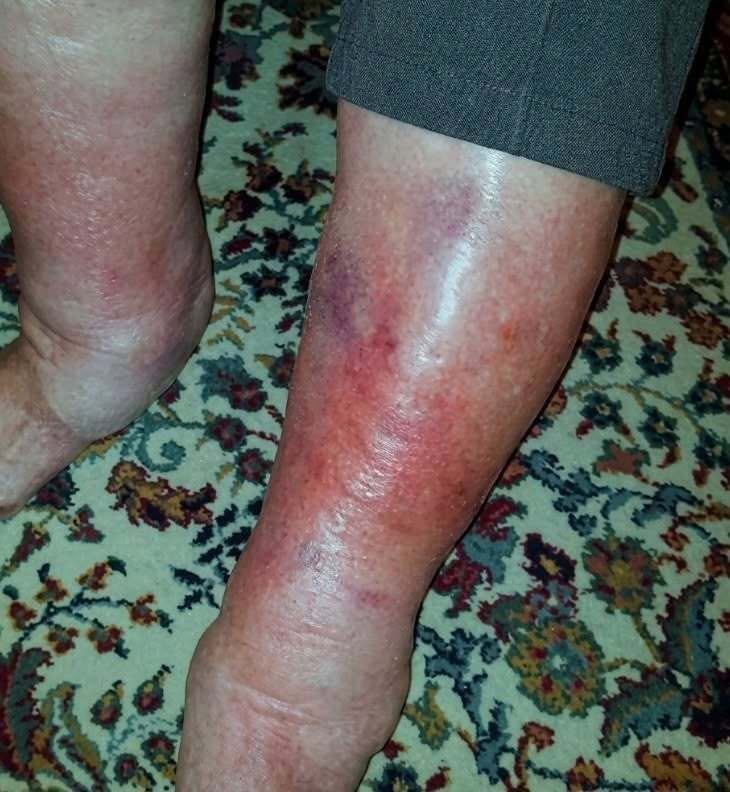
The image appears to show a lower leg that is significantly red, swollen, and shiny, with areas of purple discoloration that resemble bruising. While it is impossible to diagnose a medical condition from a photograph alone, these visible changes suggest that the leg may be affected by inflammation, poor circulation, infection, or another condition requiring medical evaluation. If someone experiences sudden swelling, severe pain, fever, or rapidly spreading redness, they should seek immediate medical attention.
What the Image May Suggest
The lower leg appears to have several noticeable features:
- Bright red discoloration extending across the shin.
- Swelling that makes the skin appear stretched and shiny.
- Dark purple or bluish patches that resemble bruising.
- Thickened skin with signs of inflammation.
- Possible edema (fluid buildup) around the ankle and lower calf.
These symptoms can occur in a variety of medical conditions, and only a healthcare professional can determine the exact cause through examination and, if necessary, laboratory tests or imaging.
Possible Causes
Cellulitis
One of the most common causes of a red, swollen lower leg is cellulitis, a bacterial infection affecting the deeper layers of the skin. Bacteria may enter through a small cut, scratch, insect bite, or cracked skin.
Common symptoms include:
- Redness
- Warmth
- Swelling
- Pain or tenderness
- Fever in some cases
Cellulitis usually requires prompt treatment with antibiotics because the infection can spread if left untreated.
Chronic Venous Insufficiency
Poor blood flow in the leg veins can cause fluid to accumulate in the lower legs.
Symptoms may include:
- Swelling after standing
- Aching or heaviness
- Skin discoloration
- Varicose veins
- Thickened or shiny skin
Over time, chronic venous insufficiency may increase the risk of skin ulcers and infections.
Venous Stasis Dermatitis
Long-term circulation problems may also cause inflammation of the skin known as venous stasis dermatitis.
Typical features include:
- Red or brown skin discoloration
- Itching
- Dry or flaky skin
- Swelling
- Thickened skin
Without proper management, the condition can progress and become more difficult to treat.
Deep Vein Thrombosis (DVT)
A blood clot in a deep vein can sometimes cause:
- Swelling in one leg
- Pain
- Warmth
- Redness
A DVT is considered a medical emergency because the clot may travel to the lungs and cause a pulmonary embolism.
Lymphedema
Damage or blockage in the lymphatic system may lead to chronic swelling.
Signs include:
- Persistent swelling
- Heavy feeling in the limb
- Tight skin
- Increased risk of infection
Treatment usually focuses on improving lymph drainage and reducing swelling.
Injury or Trauma
Bruising and swelling can also result from a fall, impact, or muscle injury.
Depending on the severity, treatment may involve:
- Rest
- Ice
- Compression
- Elevation
- Medical evaluation if severe pain or inability to walk develops
Risk Factors
Several factors increase the likelihood of lower leg swelling and redness, including:
- Older age
- Diabetes
- Obesity
- Poor circulation
- Smoking
- Reduced mobility
- Previous leg injuries
- Chronic vein disease
- Skin wounds
- Weakened immune system
Recognizing these risk factors can help individuals seek treatment before complications develop.
How Doctors Diagnose the Problem
A healthcare provider may begin with a physical examination and ask about:
- When symptoms began
- Recent injuries
- Fever or chills
- Previous infections
- Medical history
- Current medications
Additional testing may include:
- Blood tests
- Ultrasound of the leg
- X-rays if trauma is suspected
- MRI or CT scan in selected cases
- Wound cultures if drainage is present
These tests help identify the underlying cause and guide treatment.
Treatment Options
Treatment depends entirely on the diagnosis.
For bacterial skin infections, antibiotics are commonly prescribed. Severe infections may require hospitalization and intravenous antibiotics.
For circulation problems, treatment may include:
- Compression stockings
- Regular walking
- Elevating the legs
- Weight management
- Medications when appropriate
If a blood clot is diagnosed, blood-thinning medications are typically required under medical supervision.
Lymphedema treatment often involves specialized massage, compression therapy, exercise, and skin care.
In cases of injury, rest and supportive care may be sufficient, although fractures or severe trauma require prompt medical evaluation.
Caring for the Skin
Proper skin care is especially important when swelling is present.
Helpful measures include:
- Keeping the skin clean
- Moisturizing dry areas
- Avoiding scratching
- Treating small cuts promptly
- Wearing comfortable footwear
- Monitoring for new redness or drainage
Healthy skin acts as a barrier against infection.
Lifestyle Habits That Support Leg Health
Several everyday habits may help maintain healthy circulation:
- Walking regularly
- Avoiding prolonged sitting or standing
- Elevating the legs when resting
- Maintaining a healthy weight
- Staying physically active
- Drinking adequate water
- Following a balanced diet
- Managing blood pressure and blood sugar if advised by a healthcare provider
These measures may reduce swelling and improve overall vascular health.
When Immediate Medical Care Is Needed
A person should seek urgent medical attention if they experience:
- Rapidly spreading redness
- Severe swelling
- High fever
- Increasing pain
- Difficulty walking
- Chest pain
- Shortness of breath
- Sudden numbness
- Blue or black discoloration of the skin
These symptoms may indicate a serious condition requiring immediate treatment.
Prevention
Although not every condition can be prevented, the following strategies may reduce risk:
- Treat cuts and scrapes promptly.
- Keep skin moisturized to prevent cracking.
- Exercise regularly to improve circulation.
- Avoid smoking.
- Wear compression garments if recommended by a healthcare professional.
- Maintain a healthy body weight.
- Control chronic conditions such as diabetes and high blood pressure.
- Attend regular medical checkups if you have known circulation problems.
Final Thoughts
The photograph shows a lower leg with significant redness, swelling, and discoloration that could be associated with several medical conditions, including cellulitis, chronic venous insufficiency, venous stasis dermatitis, deep vein thrombosis, lymphedema, or trauma. Because these conditions can overlap in appearance, a diagnosis cannot be made from an image alone. A thorough medical evaluation is essential to determine the exact cause and recommend the appropriate treatment.
Early recognition of symptoms and timely medical care often lead to better outcomes and reduce the risk of complications. If redness continues to spread, swelling worsens, or symptoms such as fever, severe pain, chest pain, or shortness of breath occur, immediate medical attention is recommended. This article is intended for educational purposes and should not replace professional medical advice, diagnosis, or treatment.