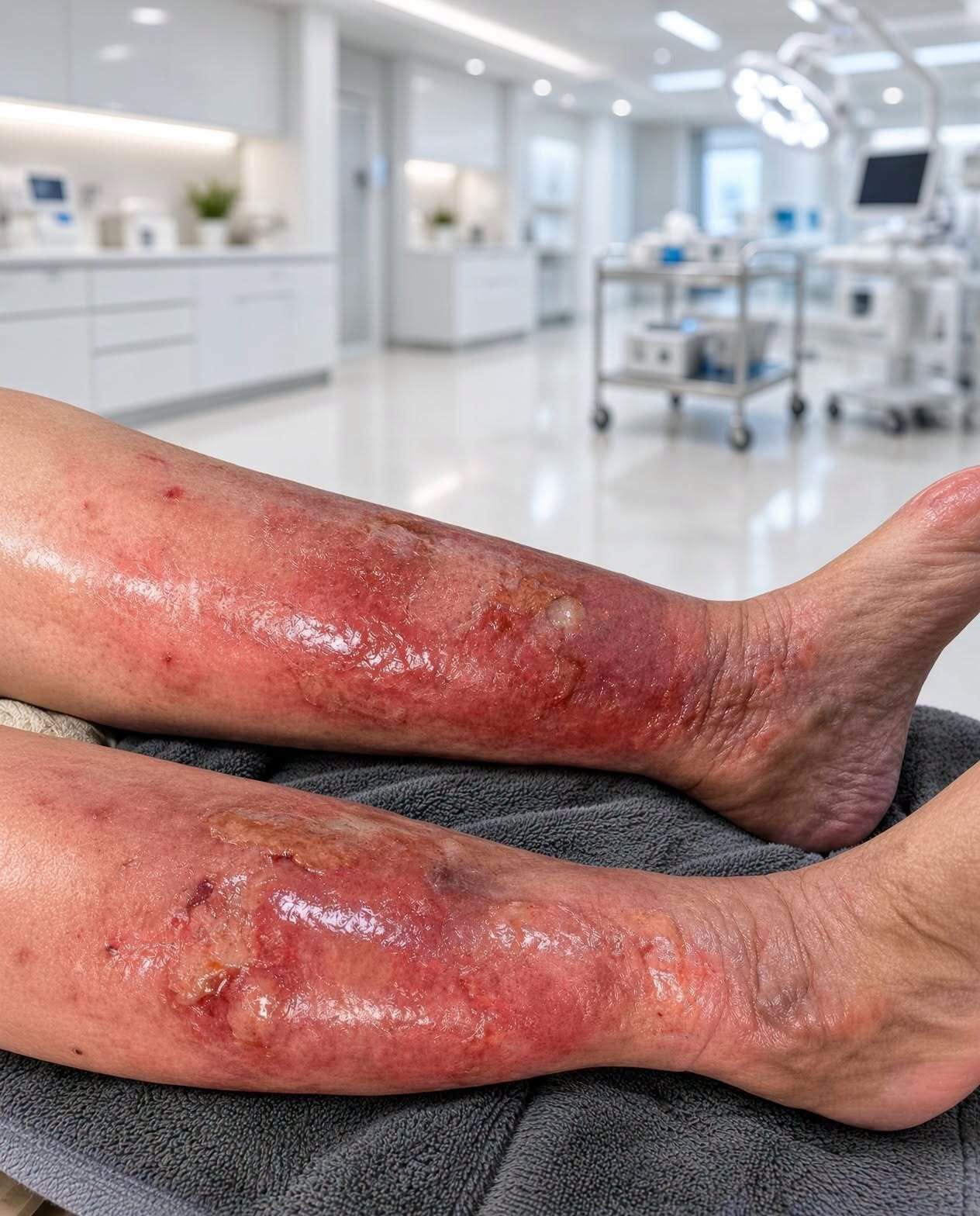
Reversing lower leg inflammation and protecting your skin from long-term damage requires a comprehensive approach that tackles both internal circulation and external skin integrity. If left unaddressed, chronic venous stasis and severe edema eventually lead to venous stasis ulcers—deep, open, slow-healing wounds that can take months of intensive wound care to close. Taking proactive control today shields your legs from irreversible fibro-sclerotic tissue hardening.
The cornerstone of long-term fluid management is medical-grade graduated compression therapy. Compression socks or stockings are engineered to deliver the strongest mechanical pressure at the ankle, gradually decreasing in tension as they move up the calf toward the knee. This graduated squeeze physically supports weakened veins, prevents backward blood pooling, and assists the natural calf muscle pump in propelling stagnant fluid back into central circulation. Putting on clean compression garments first thing in the morning—before fluid has a chance to pool—keeps swelling in check throughout the day.
Equally vital is practicing intentional positional drainage. Dedicate twenty to thirty minutes, two to three times a day, to elevating your legs above the level of your heart. Propping your calves up on firm pillows while lying flat on a bed or sofa allows gravity to work in your favor, naturally draining trapped lymphatic fluid out of the lower extremities and easing pressure on stretched epidermal tissues.
Protecting the delicate skin barrier requires gentle, consistent topical care. Wash your lower legs daily with a mild, fragrance-free, hypoallergenic cleanser and lukewarm water, avoiding harsh scrubbing that can create micro-tears. While the skin is still damp, apply a thick, fragrance-free emollient ointment—such as pure white petrolatum, ceramide barrier creams, or thick medical ointments. These seal in moisture, repair the damaged lipid barrier, and stop opportunistic bacteria from penetrating the fragile skin.
From a systemic standpoint, managing dietary sodium is essential. Reducing salt intake prevents the kidneys from retaining excess water, directly blunting the severity of peripheral edema. For those managing diabetes, keeping blood glucose levels strictly within target ranges protects fragile capillary walls from diabetic microvascular damage. Low-impact physical movement, such as thirty minutes of daily walking, swimming, or seated ankle pumps, continually activates the calf muscles, keeping blood circulating smoothly through the lower limbs.
However, knowing when to seek emergency medical attention is critical. If your leg redness expands rapidly, if you develop red streaks climbing up the calf, if the leg becomes intensely hot and painful to the touch, or if you develop a sudden fever, chills, or shortness of breath, go straight to an emergency room for urgent evaluation.
Your legs carry you through every milestone of life, and severe swelling and redness are their unmistakable way of calling for help. They are not an inevitable part of aging or a harmless reaction to fatigue. By identifying the underlying vascular and metabolic drivers, wearing proper compression support, keeping the skin barrier nourished, and seeking timely medical screening, you soothe the internal inflammation, safeguard your skin, and preserve your mobility and strength for all the years ahead.